How to Prioritise Which Cows Need Checking First
 James16 min read
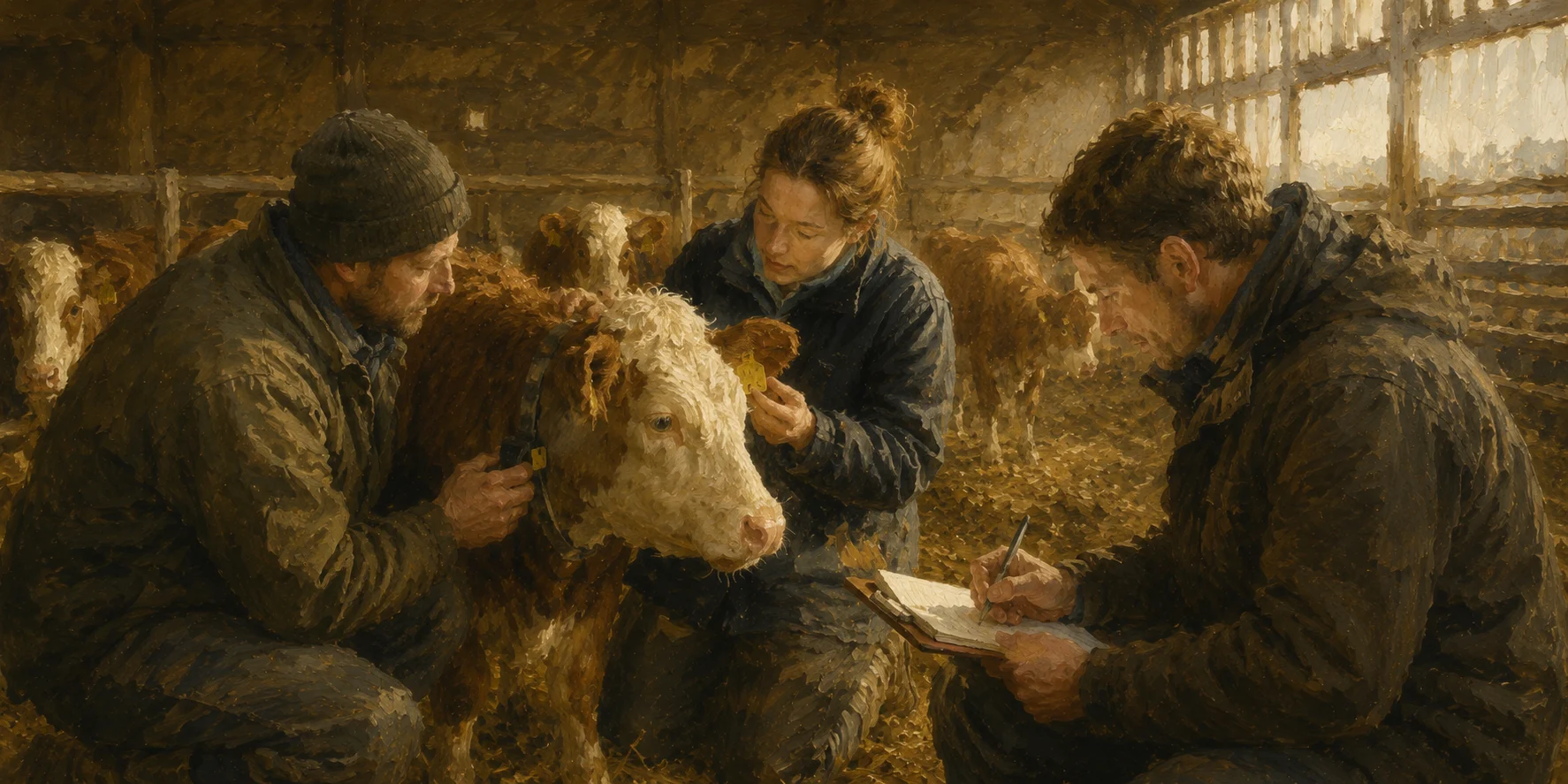
When time is limited, the challenge is not simply checking the herd. It is knowing which cows need to be checked first.
Most cattle will appear normal during a routine inspection. A small number may be showing subtle changes in movement, feeding, posture or behaviour that suggest something is wrong, but these animals are not always easy to identify from a distance.
A useful checking routine should help farmers prioritise animals according to risk rather than treating every cow as equally likely to need attention.
This does not replace a proper herd inspection. It provides a practical way to focus limited time on the animals most likely to benefit from a closer look.
Why prioritising cows matters
Cattle often hide early signs of illness, injury or discomfort.
An animal may still be standing with the herd while eating less, moving differently or beginning to separate from the group. During a quick inspection, these changes can be easy to overlook.
The difficulty increases when:
- Cattle are spread across several fields
- Parts of the farm have poor visibility
- Animals are housed in a large group
- The farmer is working alone
- There are several different age groups to manage
- Calving or calf-rearing has increased the daily workload
- Farming is combined with off-farm employment
- Checks are carried out in poor weather or darkness
The aim of prioritisation is not to shorten checks to the point where important problems are missed. It is to give farmers a clear order for deciding where closer attention is most useful.
Start by looking at the whole group
Before focusing on individual animals, it is useful to observe the herd as a group.
Normal group behaviour provides context. If most cattle are grazing, feeding, resting or moving together, an animal behaving differently may deserve closer inspection.
During the first overview, farmers can look for:
- An animal standing apart from the group
- A cow that remains lying while others rise
- An animal arriving late to feed or water
- Reduced movement compared with the rest of the herd
- Repeated lying down and standing up
- Unusual restlessness
- A change in the normal spread or movement of the group
- Animals being displaced or bullied away from feed
Looking at the group first can make individual differences easier to recognise.
It can also reveal a wider issue. If several animals show similar changes, the problem may relate to feed, water, housing, weather, grazing conditions or a shared health risk rather than one individual cow.
1. Check animals that have separated from the herd
A cow standing away from the group should usually be one of the first animals assessed.
Separation does not always mean that something is wrong. Cattle may move away from the herd to calve, seek shade, avoid competition or rest in a preferred area.
However, isolation can also be associated with:
- Illness
- Injury
- Lameness
- Calving
- Stress
- Weakness
- Difficulty competing for feed
The context matters.
A heavily pregnant cow standing alone close to her expected calving date may be behaving normally, but she should still be watched for signs that labour is beginning.
A cow with no obvious reason to be alone may need a closer examination, particularly if she is also inactive, dull, eating less or holding her head lower than usual.
2. Prioritise cows that are eating or drinking less
A change in appetite can be an important early warning sign.
Cattle may reduce their intake when they are unwell, lame, stressed, in pain or unable to compete successfully at the feed barrier.
During a herd check, farmers can look for animals that:
- Do not approach feed with the rest of the group
- Leave the feed area earlier than usual
- Stand at the feed barrier without eating
- Appear interested in feed but struggle to reach it
- Are repeatedly displaced by other cattle
- Spend less time grazing
- Show reduced rumination
- Do not approach the water source
One short observation may not reveal the full picture. An animal could have eaten before the farmer arrived or may simply be resting.
Repeated changes are more meaningful. A cow that consistently hangs back at feeding time or spends less time eating than normal should move higher on the priority list.
3. Look closely at changes in movement
Movement can reveal problems that are not immediately visible when an animal is standing still.
A cow may need closer attention if she:
- Walks more slowly than the group
- Takes shorter or uneven steps
- Arches her back while walking
- Avoids putting weight on one limb
- Struggles to rise
- Lies down more frequently than normal
- Is reluctant to walk to the parlour, feed area or water
- Falls behind when the herd moves
Lameness is not always dramatic in its early stages. Small changes in gait, posture or walking speed may appear before an animal becomes obviously lame.
Animal Health Ireland highlights that lameness has important welfare and financial consequences and can affect milk production, fertility and longevity.
Read Animal Health Ireland's guidance on the effects of lameness in dairy cows .
Watching cattle walk on a level, non-slip surface can make differences easier to identify than observing them while they are standing in deep bedding, rough ground or long grass.
4. Check cows whose normal behaviour has changed
The most useful comparison is often not one cow against another. It is the cow against her own normal behaviour.
Some animals naturally spend more time away from the group. Others are quieter, more active or more dominant at feeding.
A meaningful change may include:
- A normally active cow becoming unusually still
- A quiet animal becoming restless
- A cow spending more time lying down
- An animal repeatedly standing and lying
- A reduction in grazing or feeding
- Less rumination
- A cow no longer moving with her usual group
- An animal becoming unusually aggressive or withdrawn
This is one reason why farmer knowledge remains so important. Someone familiar with the herd may notice that an animal is simply not behaving like herself, even when there is no obvious clinical sign.
Monitoring technology can support this by comparing current activity with an individual animal's established pattern rather than relying only on a fixed herd-wide threshold.
5. Prioritise cows around calving
Cows approaching calving often require more frequent observation than the rest of the herd.
Priority should be influenced by expected calving dates, previous history and current behaviour.
Animals that may need closer attention include:
- First-calving heifers
- Cows with a history of difficult calving
- Animals carrying twins
- Cows beyond their expected calving date
- Animals bred to a higher calving-difficulty sire
- Cows showing restlessness or repeated lying and standing
- Animals separating from the herd
- Cows showing discharge or visible signs that labour is progressing
A cow approaching calving may reduce her interest in grazing, seek a quieter location or change her normal lying pattern.
These signs do not indicate exactly when the calf will be born, but they can help farmers decide which animals should be checked more closely.
Where labour appears not to be progressing normally, the cow should be assessed promptly and veterinary advice sought when necessary.
Read Teagasc's practical guidance on when to intervene during calving .
6. Pay closer attention to recently calved cows
The period after calving can place significant demands on the cow.
Recently calved animals may be at greater risk of problems such as:
- Milk fever
- Retained foetal membranes
- Uterine infection
- Mastitis
- Ketosis
- Injury following a difficult calving
- Reduced appetite
- Poor recovery after an assisted birth
Priority animals may include cows that:
- Required assistance during calving
- Delivered twins
- Are slow to return to feeding
- Appear dull or weak
- Have an abnormal discharge
- Show swelling or heat in the udder
- Have a reduced milk yield
- Are reluctant to rise or walk
Good calving records make this process easier. Farmers should be able to identify recently calved cows that experienced complications without relying on memory during a busy period.
7. Check animals with a recent health or treatment history
An animal that has recently been ill, treated or injured should remain higher on the priority list until recovery is clear.
Farmers may need to monitor:
- Whether appetite has returned
- Whether activity is returning to normal
- Whether temperature remains abnormal
- Whether the animal is walking comfortably
- Whether symptoms are improving
- Whether the animal has rejoined normal group behaviour
- Whether the treatment appears to be working
A cow may look improved during one inspection but decline again later.
Clear records help ensure that follow-up checks are completed and that information is available if several people share responsibility for the herd.
Animal Health Ireland notes that records can be particularly valuable where subclinical disease affects performance before obvious clinical signs are visible.
Read Animal Health Ireland's guidance on records and preventing disease spread within the farm .
8. Prioritise young calves and newly purchased animals
Young calves can deteriorate quickly and may show less obvious signs before becoming seriously unwell.
Calves that should receive closer attention include those that:
- Had a difficult birth
- Did not receive sufficient colostrum promptly
- Are reluctant to feed
- Have scour
- Show coughing or rapid breathing
- Have nasal or eye discharge
- Appear hollow-sided or dehydrated
- Remain lying when others rise
- Have a swollen or infected navel
- Are smaller or weaker than the group
Teagasc guidance for dairy calf-to-beef systems emphasises the importance of inspecting calves for signs of poor health regardless of the rearing system.
View Teagasc guidance on calf health and dairy calf-to-beef management .
Newly purchased cattle should also be observed carefully.
Transport, mixing, a change in feed and exposure to unfamiliar pathogens may increase risk. Separating or quarantining new arrivals can make observation easier and help reduce the risk of introducing disease to the existing herd.
9. Check animals exposed to a recent management change
Changes in routine can affect cattle behaviour even when no animal is ill.
Closer observation may be useful after:
- Moving cattle to a new field
- Housing or turning animals out to grass
- Changing feed
- Mixing unfamiliar groups
- Weaning
- Transport
- Handling or dosing
- Introducing a new bull
- Severe weather
- A disruption to water supply
These events can create temporary changes in activity, feeding and social behaviour.
They can also reveal practical problems. An animal may not understand the location of a new water source, may be bullied in a newly mixed group or may struggle with a sudden feed change.
Knowing that a management change has occurred helps farmers interpret unusual behaviour rather than assuming every change is caused by disease.
10. Look for several small signs occurring together
One small change may have a harmless explanation.
Several changes occurring together are more concerning.
For example:
- Isolation combined with reduced feeding
- Low activity combined with a raised temperature
- Falling behind the herd combined with an uneven gait
- Repeated lying and standing close to an expected calving date
- Reduced rumination combined with lower milk production
- Dullness combined with rapid breathing
The more signs that point in the same direction, the stronger the reason to examine the animal promptly.
This does not provide a diagnosis. It helps determine priority.
A simple priority system for herd checks
A practical way to organise checks is to group animals into three levels.
Priority one: check immediately
These animals show signs that may require urgent assessment.
Examples include:
- Difficulty breathing
- Inability to rise
- Severe lameness or injury
- Strong straining without progress during calving
- Signs of serious distress
- A calf that is weak, cold or unable to feed
- Sudden collapse or neurological signs
- Heavy bleeding
Veterinary advice should be sought promptly where the farmer is concerned about the welfare of the animal or unsure how to proceed.
Priority two: examine closely today
These animals show a meaningful change but do not appear to be in immediate danger.
Examples include:
- Standing apart from the herd
- Reduced feeding
- Unusual inactivity
- A mild change in gait
- Repeated behavioural changes
- Poor recovery after calving
- A recent health alert
- A recent treatment requiring follow-up
Priority three: continue routine observation
These animals appear normal and are eating, drinking, moving and interacting as expected.
They should still be included in routine checks, but they may not require the same level of individual inspection as animals showing a meaningful change.
What should a closer examination include?
Once an animal has been identified as a priority, the next step is a closer assessment.
Depending on the concern, this may include checking:
- Appetite and rumination
- Body temperature
- Breathing rate and effort
- Eyes and nasal discharge
- Gait, feet and limbs
- Udder condition
- Manure consistency
- Hydration
- Body condition
- Signs of injury or swelling
- Calving progress
- Recent treatments and health records
The farmer should consider the whole animal rather than relying on one measurement.
A normal temperature does not rule out every problem, just as a temporary change in activity does not confirm illness.
Veterinary advice should be sought when symptoms are severe, persistent, unexplained or worsening.
How monitoring technology can help prioritise cows
Manual checks provide valuable information, but they only show what is happening at the moment the farmer is present.
A monitoring system can add visibility between checks by tracking changes over time.
Depending on the system, it may help identify:
- A fall in activity
- A change in feeding or rumination
- Unusual lying patterns
- Increased restlessness
- A rise in temperature
- Separation from the herd
- An animal that has moved less than expected
- A cow whose behaviour differs from her normal pattern
The main benefit is not receiving more data. It is receiving a useful shortlist.
Instead of beginning each check with the entire herd, the farmer can first examine animals showing the most meaningful changes.
This may be particularly useful where cattle are:
- Spread across multiple fields
- Grazing away from the yard
- Managed in several groups
- Being checked overnight
- Housed in large numbers
- Difficult to observe individually
Monitoring technology cannot determine the cause of every behavioural change. An alert should be treated as a reason to inspect the animal, not as a diagnosis or instruction to treat.
Avoid creating more work through unnecessary alerts
A monitoring system is only useful if its alerts help the farmer make a decision.
Too many low-value alerts can create additional work and make important changes harder to recognise.
A useful system should make it clear:
- Which animal needs attention
- What changed
- When the change began
- How significant the change appears to be
- Whether several indicators changed together
- Where the animal is, if location is available
It should also learn what is normal for the individual animal and account for known events such as movement between fields, handling or changes in group structure.
The purpose is to make checks more targeted, not to replace one long task with a long list of notifications.
Use records to improve future checks
Prioritisation becomes more accurate when farmers have useful records.
Relevant information may include:
- Previous illnesses
- Recent treatments
- Calving history
- Expected calving dates
- Lameness history
- Milk-recording information
- Weight and growth records
- Previous monitoring alerts
- Animals that repeatedly require attention
Records can reveal patterns that are difficult to remember across a busy season.
For example, a cow showing reduced activity may be more concerning if she also experienced a difficult calving, recently received treatment or has a history of lameness.
Teagasc has highlighted the importance of using herd information to identify cows that need attention and support better animal-health decisions.
Read Teagasc guidance on using herd records to support animal-health decisions .
Prioritising does not mean ignoring the rest of the herd
Every animal still requires appropriate routine observation.
A cow that appears normal during the morning check may show a meaningful change later in the day. Conditions can also develop between inspections.
Prioritisation should therefore be used to decide:
- Which animals to inspect first
- Which animals need a closer physical examination
- Which animals need follow-up later
- Which animals require veterinary attention
It should not be used to assume that animals without an alert or obvious sign are guaranteed to be healthy.
Looking ahead
Farmers cannot give every cow the same level of individual attention during every herd check.
The practical goal is to identify meaningful differences early and direct attention towards the animals most likely to need it.
That means looking first for changes in isolation, appetite, movement, posture, activity and normal behaviour, while also considering calving dates, recent health events and individual history.
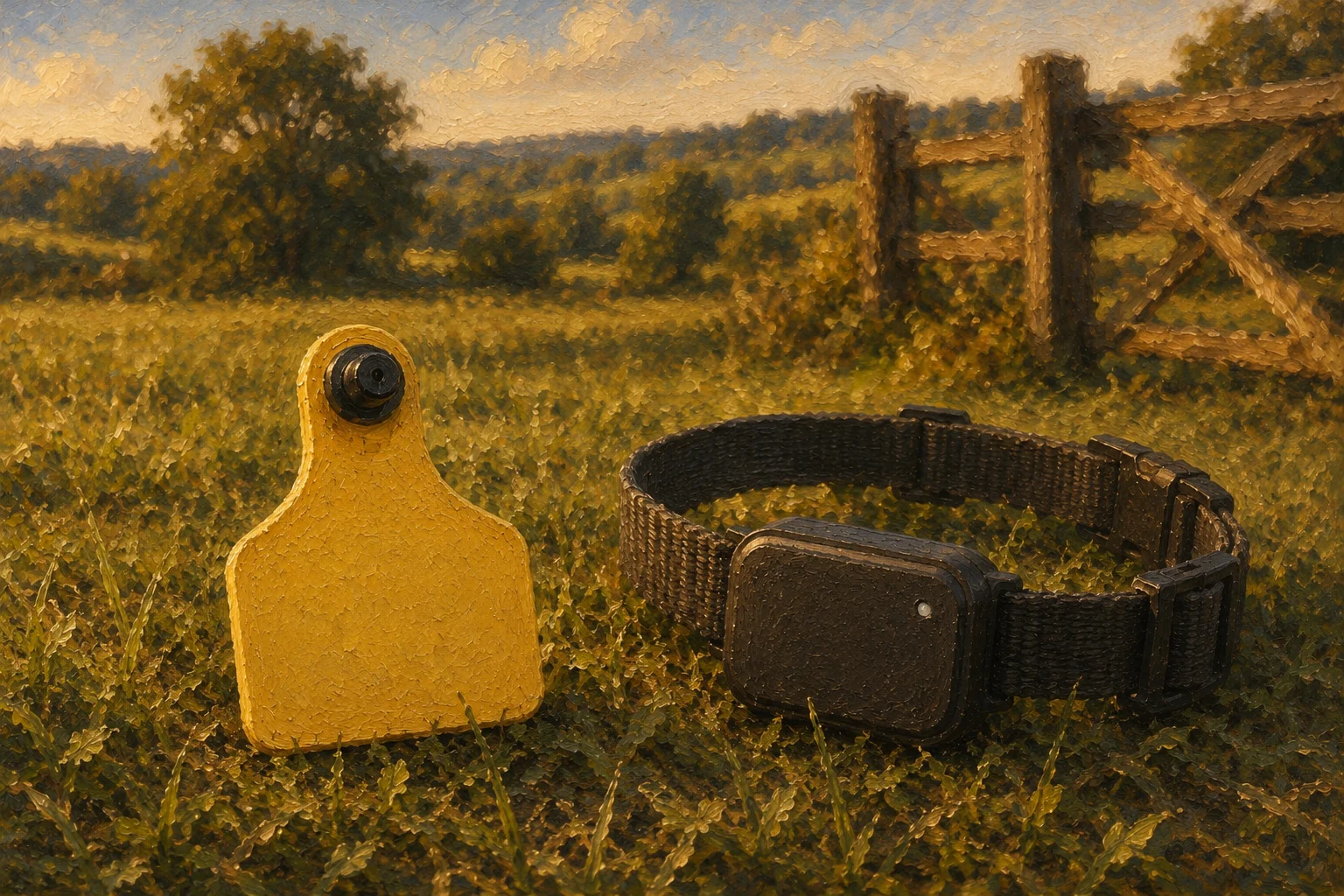
At Graze Technologies, we are developing cattle-monitoring technology designed to help farmers identify meaningful changes in activity and behaviour and prioritise which animals may need checking first.
The aim is not to replace routine herd checks or farmer judgement. It is to give farmers another layer of visibility between inspections and help them focus limited time where it may have the greatest value.
Frequently asked questions
Which cows should be checked first?
Farmers should generally prioritise cows showing signs of distress, isolation, reduced feeding, altered movement, unusual inactivity, calving difficulty or poor recovery after calving. Recently treated animals, young calves and cows with a known health risk may also need closer attention.
Why is a cow standing away from the herd?
A cow may separate because she is approaching calving, seeking shelter, avoiding competition or resting. Isolation can also indicate illness, injury, lameness or stress, particularly when accompanied by reduced feeding or unusual inactivity.
What behavioural changes can indicate illness in cattle?
Possible changes include reduced activity, eating less, lower rumination, spending more time lying down, falling behind the herd, standing alone or behaving differently from the animal's normal pattern. These changes do not diagnose a specific condition but can indicate that the animal should be examined.
Does a cow with low activity always need treatment?
No. Low activity can be influenced by rest, weather, grazing conditions, handling, calving or other factors. It should prompt closer observation rather than automatic treatment. The farmer should assess the whole animal and seek veterinary advice where necessary.
Can monitoring technology tell which cows are sick?
Monitoring systems cannot diagnose illness. They may identify changes in activity, behaviour, feeding or temperature that suggest an animal should be checked more closely.
Can cattle monitoring reduce routine checks?
Monitoring does not remove the need for routine checks. It may make checks more targeted by highlighting animals showing meaningful changes, allowing farmers to prioritise their time more effectively.
What should farmers check when a cow is behaving differently?
Depending on the concern, farmers may assess appetite, temperature, breathing, gait, rumination, manure, udder condition, injuries, hydration, calving status and recent health history. Veterinary advice should be sought where signs are severe, persistent or unclear.