A Guide to Ireland’s Native Cattle Breeds
 James15 min read
Ireland’s native cattle breeds are living links to the country’s farming history. Smaller, hardy and often instantly recognisable, these breeds were shaped by generations of farming on Irish land.
Today, most Irish cattle belong to larger international dairy and beef breeds. However, native breeds continue to be kept by farmers interested in conservation, grass-based production, distinctive food products and maintaining an important part of Ireland’s agricultural heritage.
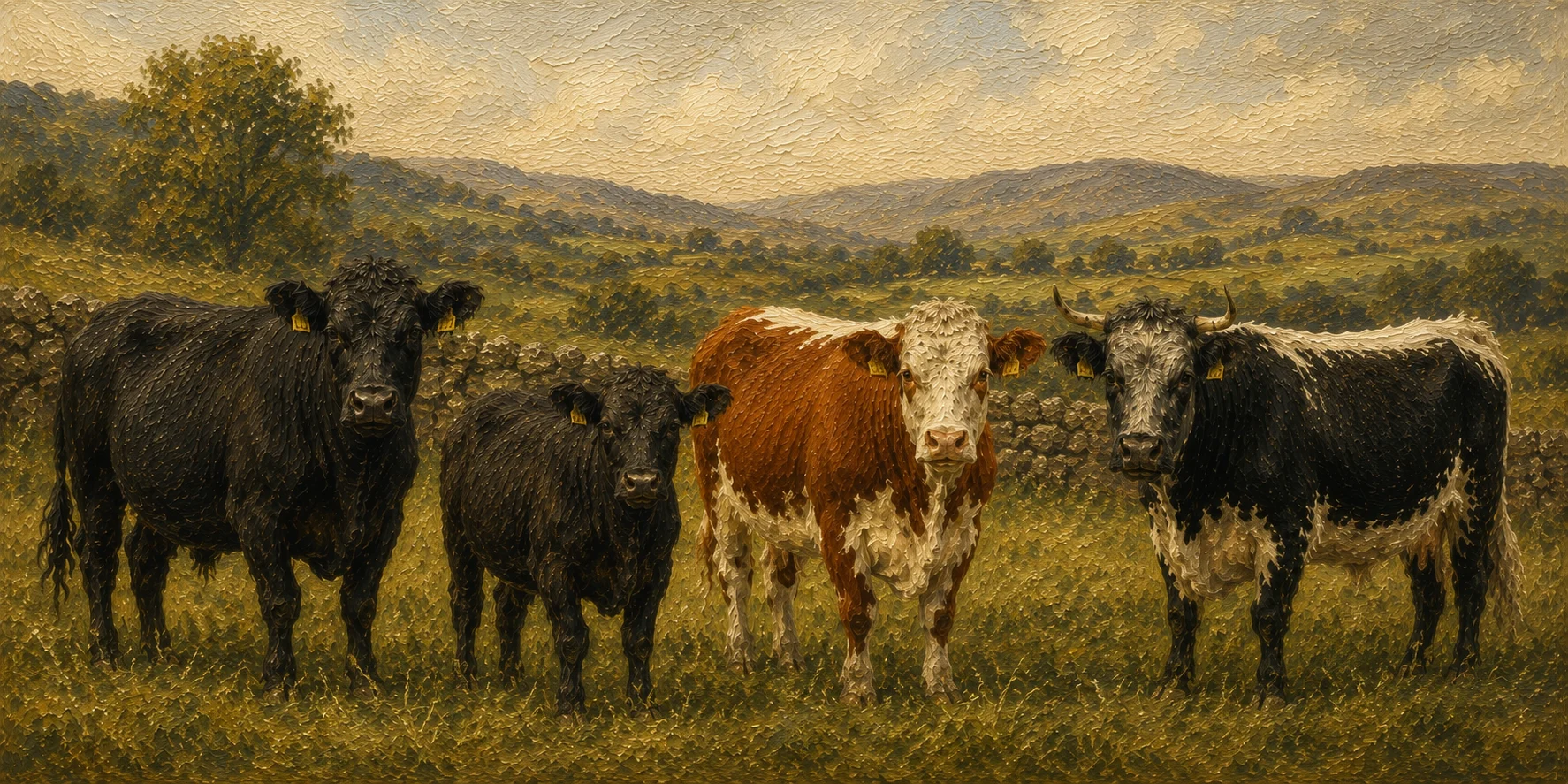
Ireland currently has four recognised native rare cattle breeds:
- Kerry cattle
- Dexter cattle
- Irish Moiled cattle
- Droimeann cattle
Each has a different appearance, history and set of characteristics. This guide introduces the four breeds and explains why farmers continue to keep them.
What makes a cattle breed native to Ireland?
A native breed is one that developed over time within Ireland and became adapted to local farming conditions.
These breeds were shaped before modern farming became highly specialised. A cow was often expected to perform several roles rather than excel in only one.
Native cattle were commonly valued for their ability to:
- Produce milk for the household
- Rear a calf
- Provide beef
- Travel over rough ground
- Make use of less productive grazing
- Remain productive with relatively modest inputs
- Cope with wet and exposed conditions
Many native breeds are therefore described as dual-purpose, meaning they were traditionally used for both milk and beef.
Explore native Irish cattle breeding in Ireland’s National Inventory of Intangible Cultural Heritage .
Why did native cattle become rare?
As farming became more specialised, farmers increasingly selected breeds developed primarily for high milk output or commercial beef production.
Specialist dairy and beef breeds offered clear advantages in more intensive systems, while smaller dual-purpose cattle became less common.
This created a difficult cycle for native breeds:
- Fewer farmers kept them
- Breeding populations became smaller
- There were fewer bulls and bloodlines available
- Commercial buyers became less familiar with them
- Some breeds came close to disappearing completely
Breed societies, individual farmers and conservation organisations have played an important role in maintaining herd books, encouraging responsible breeding and creating new interest in native cattle.
1. Kerry cattle
Kerry cattle are among the most recognisable of Ireland’s native breeds.
They are small, fine-boned cattle and are usually solid black, although a little white may occasionally appear around the udder.
The breed is associated particularly strongly with the south-west of Ireland and with the rougher ground of County Kerry.
What do Kerry cattle look like?
Typical characteristics include:
- A solid black coat
- A relatively small and light frame
- Fine legs and an agile build
- Horns that rise and turn outward in traditionally horned animals
- A refined, dairy-like appearance
Their smaller size can make them less damaging to soft or sensitive ground than much heavier cattle.
What were Kerry cattle traditionally used for?
Kerry cattle were traditionally valued primarily as dairy animals.
Their milk is associated with comparatively high butterfat and solids, making it suitable for butter and other dairy products.
They could also rear a calf and provide beef, making them practical cattle for smaller mixed farms where one animal was expected to perform several functions.
Why do farmers keep Kerry cattle today?
Farmers may be attracted to the breed because of its:
- Hardiness
- Longevity
- Ability to travel over rough ground
- Smaller mature size
- Milk quality
- Irish heritage
- Suitability for conservation grazing
The Irish Native Rare Breed Society notes that Kerry cows can remain productive into later life and are well adapted to outdoor and rough-grazing conditions.
Read more about Kerry cattle from the Irish Native Rare Breed Society .
2. Dexter cattle
Dexter cattle are small, hardy cattle that originated in Ireland and are now kept in many countries around the world.
They are commonly black but may also be red or dun.
Dexters are known for their compact size, efficient grass use and dual-purpose history.
What do Dexter cattle look like?
Dexters are noticeably smaller than most modern commercial cattle.
Typical features include:
- A compact body
- Shorter legs than many other breeds
- A black, red or dun coat
- A broad body relative to their height
- Horned and naturally polled bloodlines
There are different body types within the breed, including shorter-legged and longer-legged animals.
What are Dexter cattle used for?
Dexters are traditionally dual-purpose cattle.
They can provide:
- Beef
- Milk
- Strong maternal ability
- Calves from a relatively small cow
Today, they are commonly kept for beef, suckler production, small-scale dairying and conservation grazing.
Why are Dexters popular with smaller farms?
The breed’s size can make it attractive to smallholders and farms with limited acreage.
Farmers may value Dexters because they:
- Require less space than larger cattle
- Can finish from grass
- Are generally considered hardy
- Can make use of rougher grazing
- Produce manageable carcase sizes for direct beef sales
- Can be suitable for mixed or lower-input systems
The Dexter Cattle Society of Ireland describes the breed as hardy, easily maintained and well suited to grass-based beef and suckler production.
Learn why farmers choose Dexter cattle .
What should prospective Dexter breeders consider?
Small size does not automatically mean that cattle require little management.
Farmers still need to consider:
- Temperament
- Calving records
- Genetics
- Herd-book status
- Horn management
- The market for finished cattle or breeding stock
- Health testing
Prospective breeders should seek advice from the relevant breed society and understand the genetic conditions for which responsible Dexter breeding programmes may test.
3. Irish Moiled cattle
The Irish Moiled is one of Ireland’s most distinctive cattle breeds.
It is generally red with a white stripe running along the back and white colouring underneath the body. The face may appear roan, flecked or mottled.
The breed is naturally polled, meaning the cattle do not grow horns.
Where does the name Irish Moiled come from?
The word is associated with the Irish terms maol or moile, referring to the hornless or rounded appearance of the animal’s head.
The Irish Moiled is often affectionately called the “Moilie”.
What do Irish Moiled cattle look like?
Common features include:
- Red colouring
- A white line or finching along the back
- White underparts
- Red ears
- A red or coloured nose
- A flecked or roan face
- A naturally hornless head
Markings vary considerably. Some cattle are largely red, while others have much more white.
What were Irish Moiled cattle used for?
Irish Moiled cattle were traditionally dual-purpose animals, producing milk as well as beef.
They were valued for their ability to produce from grass and remain useful within mixed farming systems.
The Irish Moiled Cattle Society continues to promote the breed for both beef and milk production.
Visit the Irish Moiled Cattle Society .
How close did the breed come to disappearing?
The Irish Moiled population declined dramatically during the twentieth century as specialist dairy and beef breeds became more common.
A very small number of breeders maintained the remaining cattle and helped prevent the breed from disappearing.
The breed society describes the Irish Moiled as one of the oldest surviving indigenous Irish cattle breeds and the only surviving domestic livestock breed native to Northern Ireland.
Read the history of the Irish Moiled breed .
Why do farmers keep Irish Moiled cattle today?
Modern breeders may value the breed for:
- Its distinctive appearance
- Natural polling
- Hardiness
- Maternal ability
- Dual-purpose characteristics
- Grass-based production
- Conservation grazing
- Rare-breed beef
- Its connection to Irish and Northern Irish farming heritage
4. Droimeann cattle
Droimeann cattle are another highly distinctive native Irish breed.
Their name comes from the Irish word associated with the back or ridge, reflecting the white stripe commonly seen along the animal’s back.
Droimeann cattle were formally recognised as a native rare Irish cattle breed in 2020.
Read the Department of Agriculture’s announcement recognising the Droimeann .
What do Droimeann cattle look like?
Droimeann cattle can show considerable variation in colour.
Common characteristics include:
- Black, red, blue or roan colouring
- A white stripe along the back
- White colouring underneath the body
- A white tail
- Dark sides
- A white patch or diamond on the flank in some animals
- Horns in many animals, although naturally polled cattle can occur
Some Droimeann cattle are nearly solid black or red, while others have more extensive white colouring.
What are Droimeann cattle used for?
The Droimeann is a dual-purpose breed with characteristics associated with both milk and beef production.
The Droimeann Cattle Society describes the breed as small to medium in size, placid in temperament and dairy-like in shape.
The breed is also associated with milk containing good solids and meat with noticeable marbling.
Learn more about the characteristics of Droimeann cattle .
Why are Droimeann cattle important?
Droimeann cattle represent a distinctive Irish genetic resource and an important part of traditional cattle breeding.
Recognition of the breed has helped support:
- A formal herd book
- Genetic testing
- Breed conservation
- Greater awareness among farmers
- The identification of suitable breeding animals
Maintaining a rare breed requires careful management of bloodlines so that numbers can increase without creating excessive inbreeding.
How can you tell the four breeds apart?
The breeds can often be distinguished by their size, colour and markings.
Kerry
- Usually solid black
- Small and fine-boned
- Dairy-like build
- Traditionally horned
Dexter
- Small and compact
- Black, red or dun
- May be horned or polled
- Broader and stockier than a Kerry
Irish Moiled
- Red and white
- Often has a white stripe along the back
- Flecked or roan face
- Naturally polled
Droimeann
- Black, red, blue or roan sides
- Distinctive white back and underside
- Commonly horned
- Highly variable markings
Why might a farmer choose a native cattle breed?
Native breeds will not suit every farm or production system.
However, farmers may choose them for several reasons.
Hardiness
Native cattle developed under Irish conditions and are commonly associated with the ability to manage wet weather, rough grazing and exposed environments.
Hardiness does not remove the need for good nutrition, shelter, parasite control or appropriate veterinary care.
Smaller size
Smaller cattle may:
- Require less feed for maintenance
- Be easier on soft ground
- Suit smaller holdings
- Produce more manageable carcase sizes
- Be useful for conservation grazing
The economic advantage depends on stocking rate, output, market price and the wider farm system.
Direct sales and distinctive products
Native-breed beef, milk or cheese can give a farm a clear product story.
Customers may be interested in:
- The history of the breed
- How the cattle are raised
- Grass-based production
- Rare-breed conservation
- Buying directly from the farm
A rare breed alone does not guarantee a premium. Farmers still need consistent quality, suitable processing, strong marketing and enough customers willing to pay the required price.
Conservation grazing
Smaller hardy cattle can be useful for managing species-rich grassland, scrub and less productive ground.
Conservation grazing uses livestock to maintain habitats that might otherwise become overgrown or lose plant diversity.
The breed, stocking density and grazing period need to suit the habitat being managed.
Preserving agricultural heritage
Keeping native breeds helps protect genetic diversity and maintain a connection with Ireland’s farming history.
Once a breed disappears, its unique combination of characteristics and genetic material cannot easily be recreated.
Are native breeds suitable for commercial farms?
They can be, but the answer depends on the business model.
Native breeds may struggle to compete directly with specialist breeds where the system is focused only on maximum milk volume, rapid growth or conventional carcase specifications.
They may be better suited to businesses built around:
- Lower-input farming
- Grass-based beef
- Direct sales
- Rare-breed products
- Conservation grazing
- Farm shops
- Agritourism
- Smaller-scale dairying
- Heritage and breeding-stock sales
A farmer should identify the market before buying cattle.
Producing a distinctive animal is only valuable if there is a realistic outlet for the calves, breeding stock, milk or beef.
What should farmers consider before starting a native herd?
Prospective breeders should look beyond appearance and rarity.
Important questions include:
- What is the purpose of the herd?
- Will the farm produce beef, milk or breeding stock?
- Is there a local market?
- How many registered animals are available?
- Which bloodlines are suitable?
- What health testing is required?
- Does the animal qualify for herd-book registration?
- Are horned cattle suitable for the farm’s facilities?
- What finishing age and carcase type can be expected?
- Is direct selling necessary to achieve a viable return?
Breed societies can provide information about registered breeders, herd-book rules and suitable breeding animals.
Why herd books matter
A herd book records recognised pedigree animals within a breed.
For a rare breed, this information is especially important because it helps breeders:
- Confirm ancestry
- Avoid breeding animals that are too closely related
- Track important bloodlines
- Maintain breed characteristics
- Plan matings
- Protect the integrity of the breed
An animal that resembles a native breed may not necessarily qualify for registration.
Farmers purchasing animals for pedigree breeding should confirm their registration status and documentation before agreeing to buy.
Are supports available for native rare breeds?
Agricultural supports and conservation measures can change between schemes and application periods.
Farmers keeping native breeds should review current Department of Agriculture and ACRES requirements carefully rather than assuming that every animal automatically qualifies for support.
Requirements may relate to:
- Breed eligibility
- Herd-book registration
- Breeding females
- Producing eligible offspring
- Animal identification
- Record keeping
- Retention periods
Farmers should confirm the current rules with the Department of Agriculture, their agricultural adviser or the relevant breed society before making decisions based on a potential payment.
Where can people see Ireland’s native cattle breeds?
Native cattle can be seen at agricultural shows, specialist breed events, conservation farms and holdings that sell directly to visitors or customers.
Good places to look include:
- National and regional agricultural shows
- Breed-society sales and open days
- Rare-breed displays
- Farm shops specialising in native-breed beef
- Conservation-grazing projects
- Open farm events
Breed-society websites and social-media pages often list upcoming events and participating breeders.
Native breeds and modern cattle monitoring
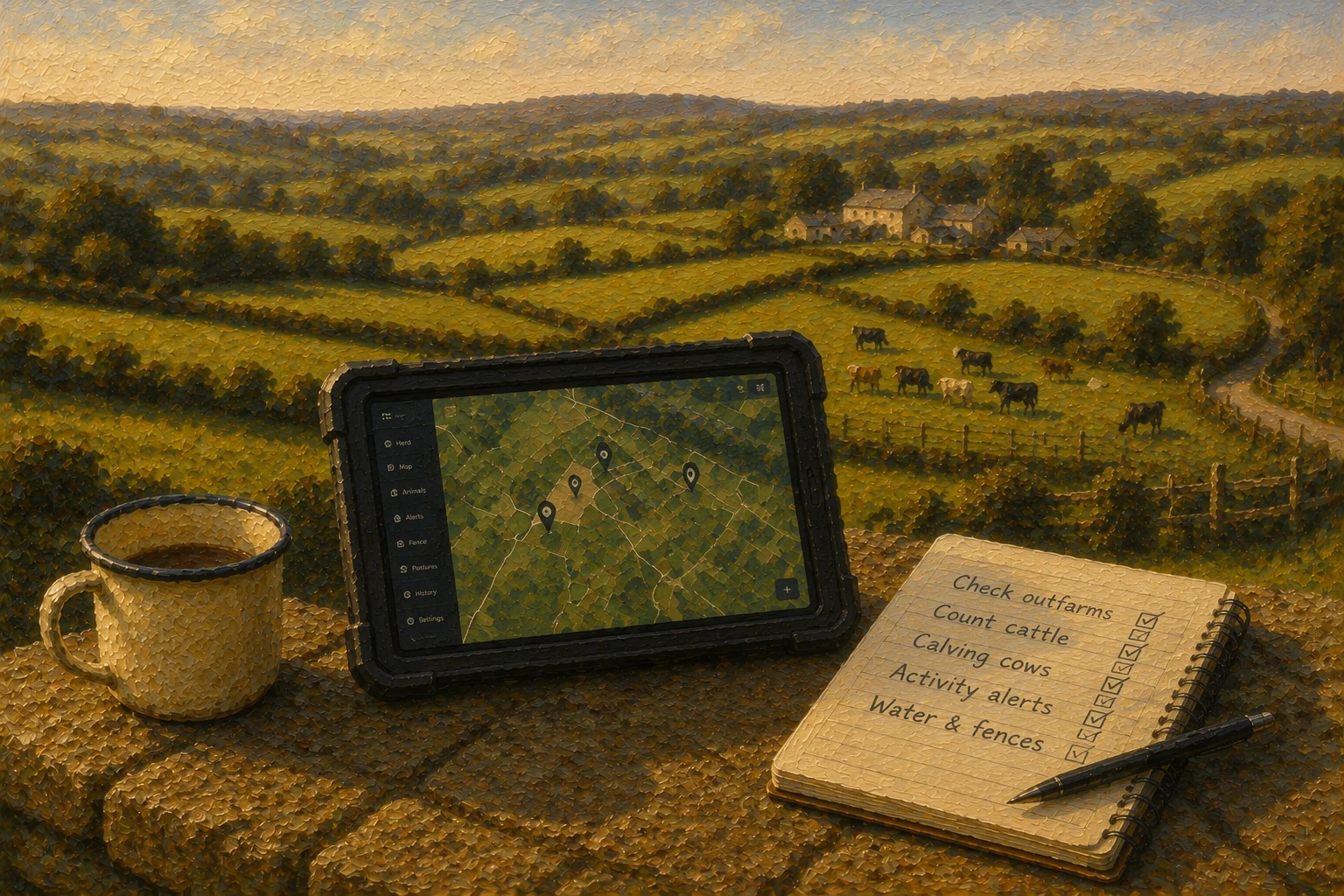
Native cattle may be kept in extensive systems, on rough ground or across land where animals are not always visible from the yard.
This can create familiar monitoring challenges, including:
- Locating individual animals
- Recognising changes in activity
- Monitoring cows near calving
- Checking cattle across several grazing areas
- Identifying animals that have separated from the group
The same monitoring technology will not necessarily suit every breed or system.
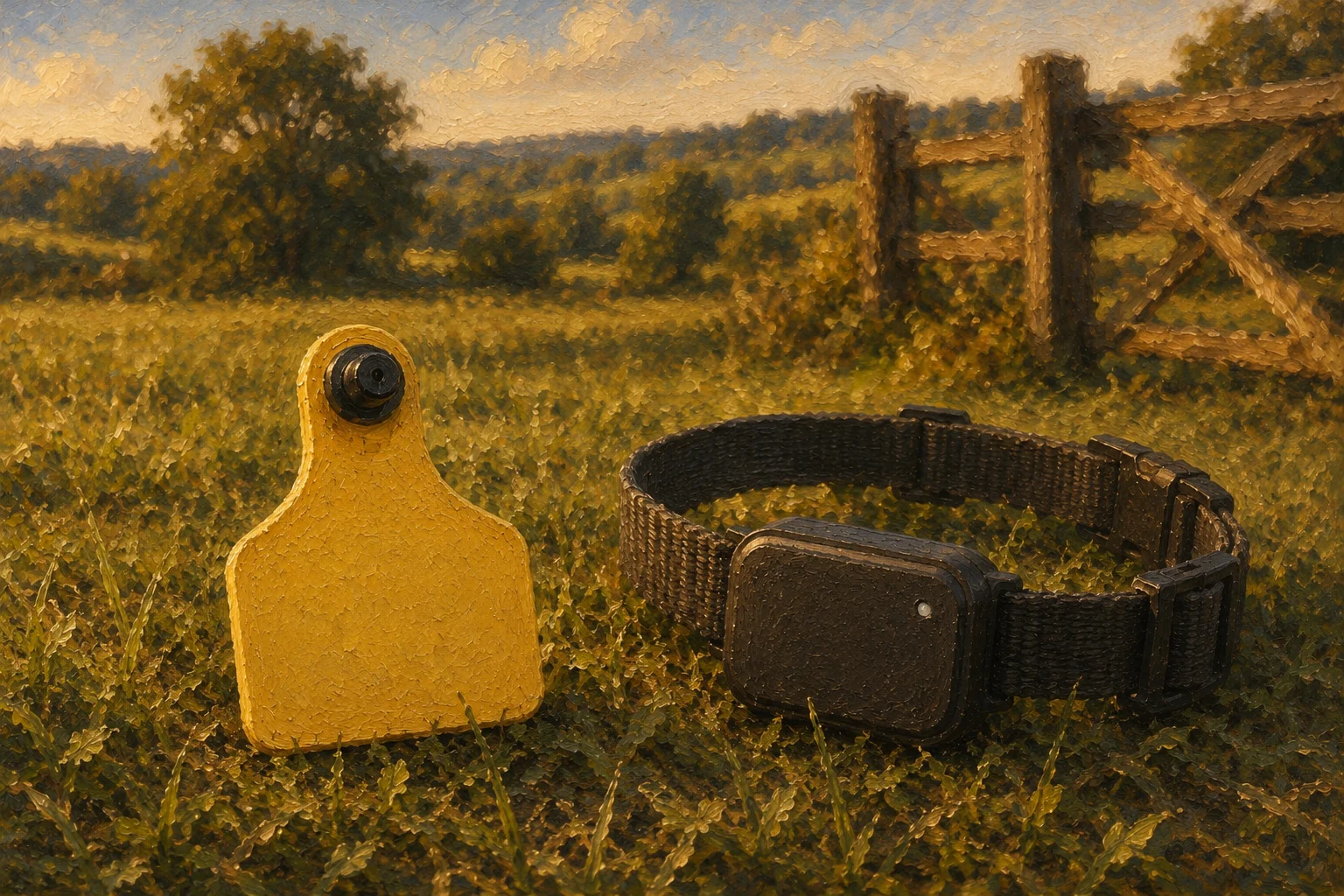
Device weight, fit, battery life, range and connectivity all need to be appropriate for the size of the animal and the conditions in which it is managed.
At Graze Technologies, we are developing cattle-monitoring technology intended to help farmers improve visibility of animals between routine checks, including cattle managed in pasture-based and more extensive systems.
Looking ahead
Kerry, Dexter, Irish Moiled and Droimeann cattle each represent a different part of Ireland’s farming heritage.
They are not museum pieces. They remain working cattle used for beef, milk, suckler production, breeding, conservation grazing and direct-sales businesses.
Their future depends on farmers continuing to breed them responsibly and finding systems in which their characteristics have practical and economic value.
For customers and visitors, native breeds also provide a visible connection between Irish food, farming and the landscapes in which these cattle developed.
Frequently asked questions
What are Ireland’s native cattle breeds?
Ireland’s four recognised native rare cattle breeds are Kerry, Dexter, Irish Moiled and Droimeann cattle.
What is the smallest Irish cattle breed?
Dexter cattle are particularly well known for their small and compact size. Kerry cattle are also considerably smaller and lighter than many modern commercial breeds.
Which Irish cattle breed is black?
Kerry cattle are normally solid black. Dexter cattle are also commonly black, although red and dun Dexters occur. Droimeann cattle may have black sides combined with a white back and underside.
Which Irish cattle breed has a white stripe along its back?
Irish Moiled and Droimeann cattle are both associated with distinctive white colouring along the back. Irish Moiled cattle are generally red and white, while Droimeann cattle may have black, red, blue or roan sides.
Are Irish native cattle breeds used for beef or dairy?
All four breeds have histories connected to dual-purpose farming, although their modern uses vary. They may be kept for beef, suckler production, milk, conservation grazing, breeding stock or direct-sales businesses.
Are native cattle easier to keep?
Native breeds are often associated with hardiness, smaller size and an ability to use grass and rougher grazing. They still require appropriate nutrition, housing or shelter, health care, handling and breeding management.
Why should rare cattle breeds be protected?
Rare breeds preserve genetic diversity, cultural heritage and characteristics developed under local farming conditions. Once a breed disappears, its unique genetic material and history cannot easily be recovered.
Where can I buy native Irish cattle?
The relevant breed society is a good starting point. Breed societies may provide breeder directories, sales information, herd-book rules and advice on purchasing registered cattle.