Cattle Collars in Ireland: Costs, Benefits & Whether They're Worth It
 James10 min read
GPS cattle collars can help Irish farmers improve herd visibility, reduce time spent searching for cattle and make daily checks more targeted. But whether they are worth the cost depends on the farm, the land type and the problem the farmer is trying to solve.
For farms with fragmented land, outfarms, rough grazing or outdoor calving, GPS collars can be a practical tool. For farms where cattle are always beside the yard and easy to inspect, the return may be lower.
The key question is not whether GPS collars work. It is whether they solve a real problem on your farm.
Quick answer: GPS cattle collars are most likely to be worth it for Irish farms with fragmented land, outfarms, outdoor calving, rough grazing or labour pressure. They are less likely to pay back quickly where cattle are close to the yard and easy to check manually.
What do GPS cattle collars actually do?
At the simplest level, GPS cattle collars help farmers know where animals are.
This can be useful when cattle are grazing across several blocks of land, when fields are difficult to see from the yard, or when animals are on rough ground, hill grazing or outfarms.
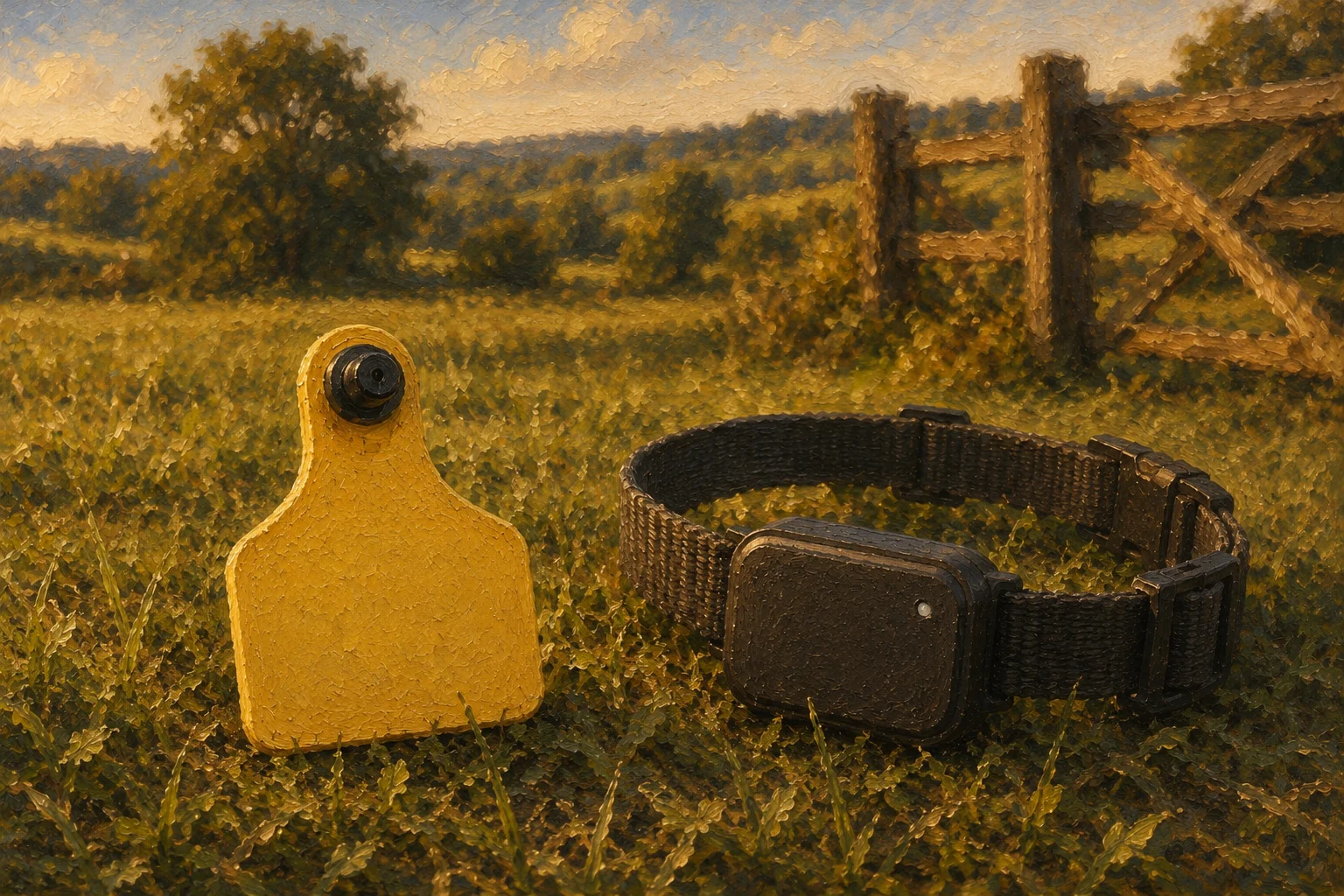
Some systems do more than show location. More advanced collars or livestock monitoring devices may also track activity, movement patterns, restlessness or changes in behaviour.
That difference matters. A basic GPS tracker can help you find an animal. A monitoring system with activity or behaviour alerts can help you decide which animals may need attention.
GPS collars in Ireland: what are they useful for?
Irish farms often have visibility challenges that make GPS collars more useful.
Land may be split across different blocks. Cattle may be grazing away from the main yard. Hedgerows, hills and field layout can make it difficult to see every animal quickly. During calving, breeding or busy grazing periods, repeated manual checks can take time and add stress.
GPS collars can help farmers answer practical questions:
- Where are the cattle now?
- Are animals still in the expected field?
- Has one animal moved away from the group?
- Which field should be checked first?
- Has anything changed since the last inspection?
- Is an outfarm group still where it should be?
For farmers managing cattle across distance, that visibility can make day-to-day herd management more controlled and less reactive.
Types of cattle monitoring systems
Not every collar or sensor does the same job. Before comparing prices, farmers should understand what type of system they are looking at.
| System type | Main use | Best suited to |
|---|---|---|
| Basic GPS tracker | Shows animal location on a map | Finding cattle on outfarms, rough grazing, hill ground or fragmented land. |
| GPS collar with activity monitoring | Combines location with movement or activity changes | Farms needing better visibility during calving, breeding or daily checks. |
| Health monitoring ear tag or sensor | Tracks behaviour, activity or routine changes | Farmers looking for earlier signs that an animal may need closer attention. |
A low-cost GPS tracker may be useful if the main problem is location. If the farmer wants calving alerts, heat detection or early behaviour alerts, then activity and behaviour monitoring become much more important.
What GPS collars do not solve on their own
GPS is useful, but location alone does not tell the full story.
A collar may show that a cow is in the corner of a field, but it may not explain whether she is close to calving, unwell, in heat or simply resting normally.
That is why farmers should look carefully at what the system actually measures. Some products are mainly location trackers. Others include activity monitoring, heat detection, calving-related alerts or health-focused behaviour insights.
If the main problem is finding animals, GPS may be enough. If the main problem is spotting changes in health, heat or calving behaviour, then a broader livestock monitoring system may offer more value.
What costs should farmers consider?
The price of the collar or tag is only one part of the cost.
Before investing, farmers should consider the full annual cost of the system, including:
- The upfront cost of the collar, tag or sensor
- Monthly or annual subscription fees
- SIM card, data or connectivity costs
- Gateway or base station costs, if required
- Battery charging or replacement
- Lost or damaged devices
- Setup time
- Support, repairs and replacement policies
A lower-cost tracker may be good value if location is the main issue. A more advanced system may be better value if it also helps with calving visibility, heat detection or behaviour alerts.
A simple cost example
Many farms do not need to monitor every animal all year round.
For example, a suckler farmer may choose to monitor priority animals during key periods, such as cows close to calving, breeding animals or groups grazing away from the main yard.
As a simple example, monitoring 25 priority cows during calving season at €4 per animal per month would cost about €100 per month in subscription fees, before any device or setup costs.
The value depends on whether that visibility reduces wasted checks, supports calving response, improves heat detection or helps identify animals that need attention sooner.
The most practical approach is often to start with the highest-value animals or highest-risk period, rather than assuming every animal needs a device from day one.
Where the return on investment can come from
The return from GPS collars or livestock monitoring usually comes from several practical gains rather than one single saving.
| Potential benefit | How it creates value | Most relevant for |
|---|---|---|
| Less time searching | Reduces walking, driving and repeated checking across land blocks | Outfarms, fragmented land and rough grazing |
| More targeted checks | Helps farmers focus on animals or groups that may need attention | Larger groups, busy periods and outdoor systems |
| Calving visibility | May help identify restlessness, isolation or unusual behaviour before or during calving | Outdoor calving and suckler herds |
| Heat detection support | Activity changes may help identify animals that should be observed more closely | Breeding herds and farms using AI |
| Earlier investigation | Behaviour changes can prompt farmers to check an animal sooner | Health monitoring and higher-risk groups |
The strongest case is usually found where the system solves a problem that already costs the farmer time, sleep, fuel, missed heats or uncertainty.
GPS collars are worth considering if
GPS cattle collars are most likely to make sense where location, visibility or labour pressure are genuine challenges.
They are worth considering if:
- You manage cattle across fragmented land or outfarms
- You calve outdoors or away from the yard
- You spend time searching for animals
- You graze cattle on rough ground, hill land or large paddocks
- You want better visibility between routine checks
- You need support with heat, calving or behaviour alerts
- You want to prioritise which animals need closer inspection
GPS collars may be harder to justify if
GPS collars may be harder to justify where the farm already has strong visibility and easy access to animals.
They may be less urgent if:
- Your herd is small and close to the yard
- You can inspect every animal quickly and easily
- Your main issue is record keeping rather than location or behaviour
- You do not have a recurring problem with finding cattle
- You do not need calving, heat or activity alerts
- The subscription cost is high compared with the problem being solved
That does not mean the technology has no value. It simply means the return may be lower if the farm already has good visibility and low checking pressure.
Farm situations where monitoring adds value
| Farm situation | Likely value | Why |
|---|---|---|
| Fragmented land | High | GPS visibility can reduce time spent locating cattle across different blocks. |
| Outfarms | High | Farmers can check location before travelling and prioritise where to go first. |
| Outdoor calving | Medium to high | Location and activity changes may help identify cows that need closer checks. |
| Heat detection | Depends on the system | Useful only if the system includes reliable activity monitoring, not GPS alone. |
| Small herd beside the yard | Lower | Animals may already be easy to inspect and locate manually. |
Our verdict: are GPS cattle collars worth it?
For many Irish farms, GPS collars are worth considering when they solve a clear visibility problem.
The strongest use cases are outfarms, fragmented land, rough grazing, outdoor calving and farms where finding or checking animals takes meaningful time.
They are less compelling where cattle are close to the yard, easy to inspect and already well covered by routine checks.
For farmers comparing options, the best approach is to start with the job to be done: finding cattle, improving calving visibility, supporting heat detection or spotting unusual behaviour earlier.
If the system solves one of those problems clearly, it may be worth serious consideration. If the problem is vague, the return will be harder to prove.
What should farmers ask before buying?
Before choosing a GPS collar or livestock monitoring system, farmers should ask:
- What problem am I trying to solve?
- Is the main need location, calving, heat detection, health alerts or a combination?
- How many animals actually need to be monitored at one time?
- Can devices be rotated between animals or groups?
- What is the full annual cost including subscriptions?
- Does the system work on my land type?
- Does it require mobile coverage in every field?
- How often does the battery need charging or replacing?
- What happens if a collar or tag is lost?
- Will this make daily work simpler?
A good system should fit into the farm's existing routine, not add another layer of work.
Graze Technologies pilot programme
At Graze Technologies, we are developing livestock monitoring technology designed for Irish farming systems, with a focus on meaningful behaviour alerts, simple decision support and better visibility across the herd.
We are currently speaking with Irish farmers who are interested in testing livestock monitoring in real farm conditions. Our pilot programme is free for selected farms and is designed to help us understand how monitoring can best support Irish suckler, beef and mixed farming systems.
If you are managing cattle across fragmented land, calving outdoors, struggling with visibility across groups or interested in earlier behaviour alerts, you can apply for the Graze pilot programme here.
Frequently asked questions
Are GPS cattle collars worth it for Irish farms?
GPS cattle collars can be worth it for Irish farms with fragmented land, outfarms, rough grazing, outdoor calving or labour pressure. They are less likely to pay back quickly where cattle are close to the yard and easy to check manually.
What are GPS cattle collars used for?
GPS cattle collars are mainly used to show where animals are. More advanced systems may also include activity monitoring, behaviour alerts, heat detection or calving-related insights.
Do GPS cattle collars help with calving?
Basic GPS collars mainly show location. Systems with activity or behaviour monitoring may help farmers identify cows that are restless, isolated or showing changes that suggest closer calving checks are needed.
Do GPS collars detect illness?
GPS alone does not detect illness. Monitoring systems that include activity or behaviour tracking may highlight changes that suggest an animal should be checked more closely, but they do not diagnose disease.
Do farmers need a collar on every cow?
Not always. Some farms may get more value by monitoring priority animals during key periods, such as cows close to calving, breeding animals or groups grazing away from the yard.
What is the difference between GPS collars and health monitoring ear tags?
GPS collars mainly help farmers locate animals. Health monitoring ear tags focus more on activity, behaviour and routine changes that may suggest an animal needs closer inspection.
Is the Graze Technologies pilot free?
Graze Technologies is currently developing a free pilot programme for selected Irish farms. The aim is to test livestock monitoring in real farm conditions and learn what farmers need most from the system.