Cattle Monitoring Systems: A Complete Guide for Irish Farmers
 James18 min read
Cattle monitoring systems are designed to give farmers greater visibility into what is happening across the herd between routine checks.
Depending on the system, they may track activity, feeding or rumination behaviour, body temperature, location, weight, heat activity or changes that suggest an animal should be examined more closely.
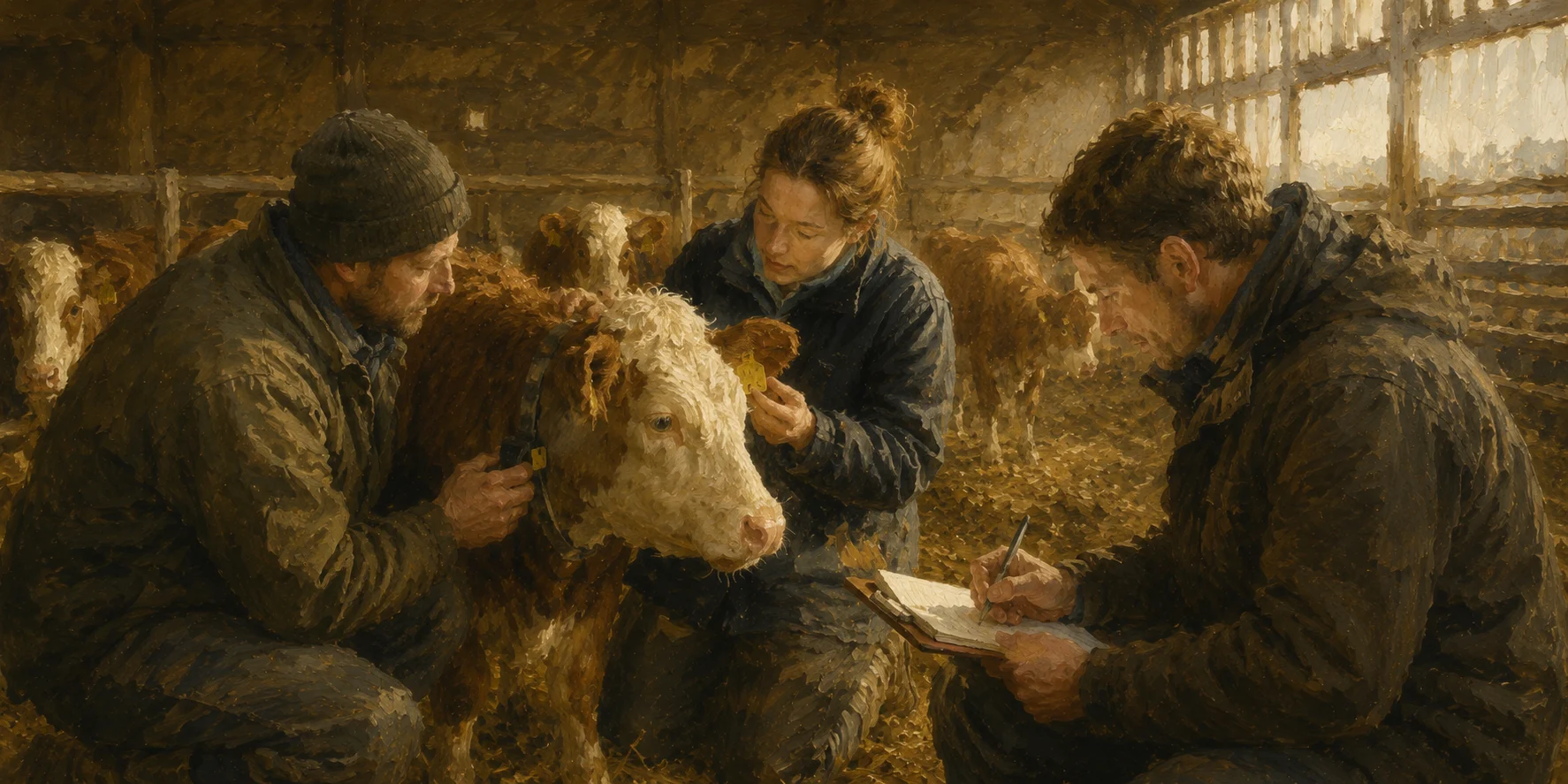
The purpose is not to replace stockmanship or physical checks. It is to help farmers identify which animals may need attention, particularly when cattle are spread across fields, housed in large groups or difficult to observe throughout the day and night.
This guide explains how cattle monitoring systems work, the different options available and what Irish farmers should consider before choosing one.
What is a cattle monitoring system?
A cattle monitoring system uses sensors or connected equipment to collect information about individual animals or the wider herd.
The system usually consists of:
- A device attached to, placed inside or used around the animal
- A method of transmitting or reading the information
- Software that processes the data
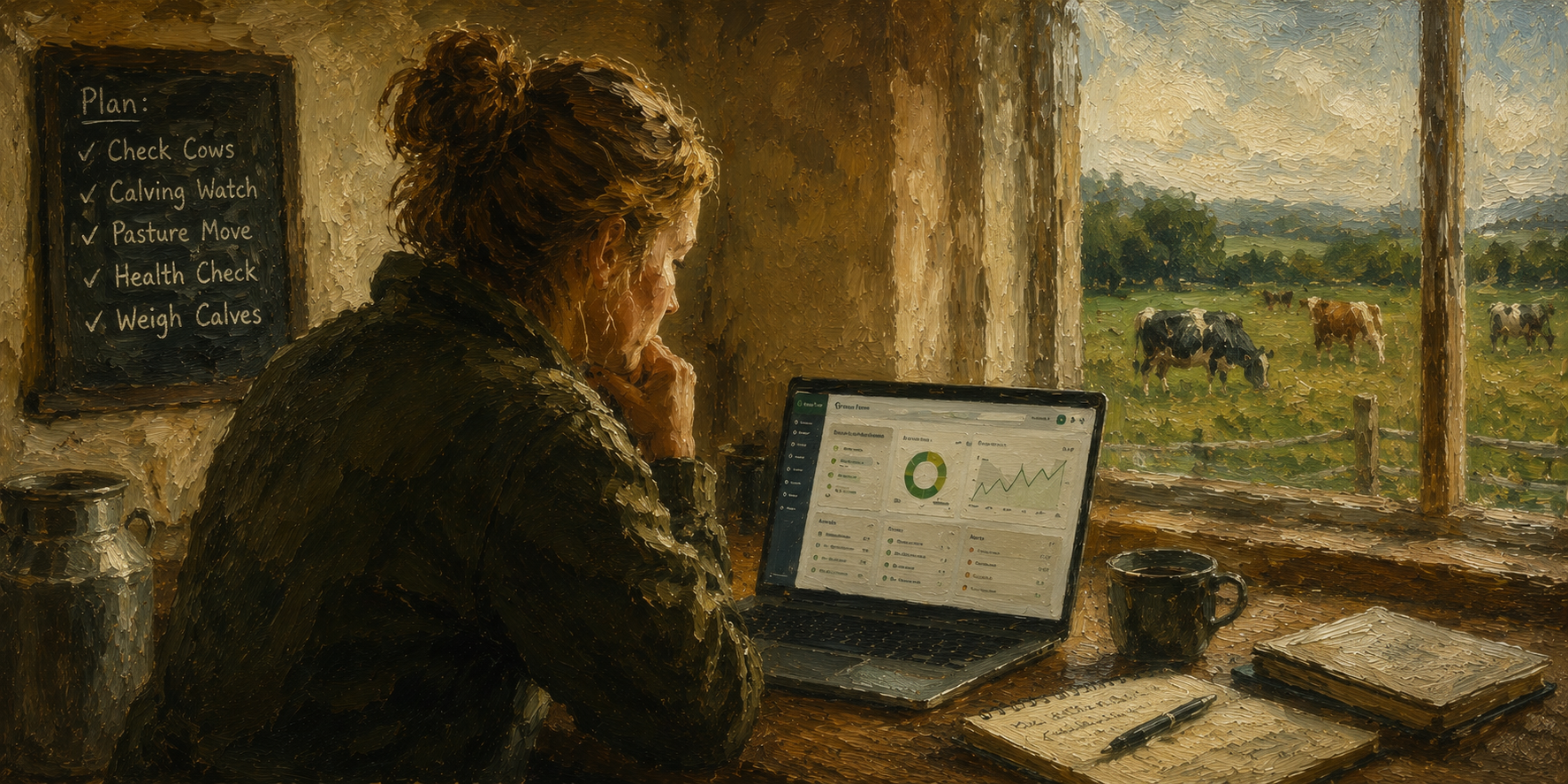
- A mobile app, computer dashboard or farm-management platform
- Alerts or reports that help the farmer interpret what has changed
Some systems continuously monitor behaviour and send alerts automatically. Others collect information when the animal passes a reader, enters the parlour or is weighed.
Cattle monitoring is part of a wider area known as precision livestock farming. Teagasc describes precision agriculture as bringing together information from animal, field and machinery sensors to support more informed farm-management decisions.
Read more about Teagasc's work on precision agriculture and smart farming.
How do cattle monitoring systems work?
Most monitoring systems begin by establishing what normal behaviour looks like for an individual animal or group.
A sensor may collect information such as movement, lying time, feeding activity or temperature. The software then looks for changes or patterns within that information.
For example:
- A rise in activity may be associated with heat
- A fall in movement may suggest illness, injury or lameness
- A change in rumination may indicate that an animal is eating differently
- Repeated standing and lying may occur before calving
- Moving away from the herd may suggest calving, illness or stress
- A change in weight gain may indicate a feeding, health or performance issue
When a significant change is detected, the system may send an alert to the farmer's phone or add the animal to a list for closer inspection.
An alert is not a diagnosis. Different conditions can cause similar behavioural changes, and weather, handling, housing, grazing conditions and movement between fields may also affect activity.
The farmer still needs to locate the animal, assess it and decide whether any action is required.
What types of cattle monitoring systems are available?
Cattle monitoring technology comes in several forms. The right option depends on what the farmer wants to monitor, how the cattle are managed and the conditions in which the equipment will be used.
Collars
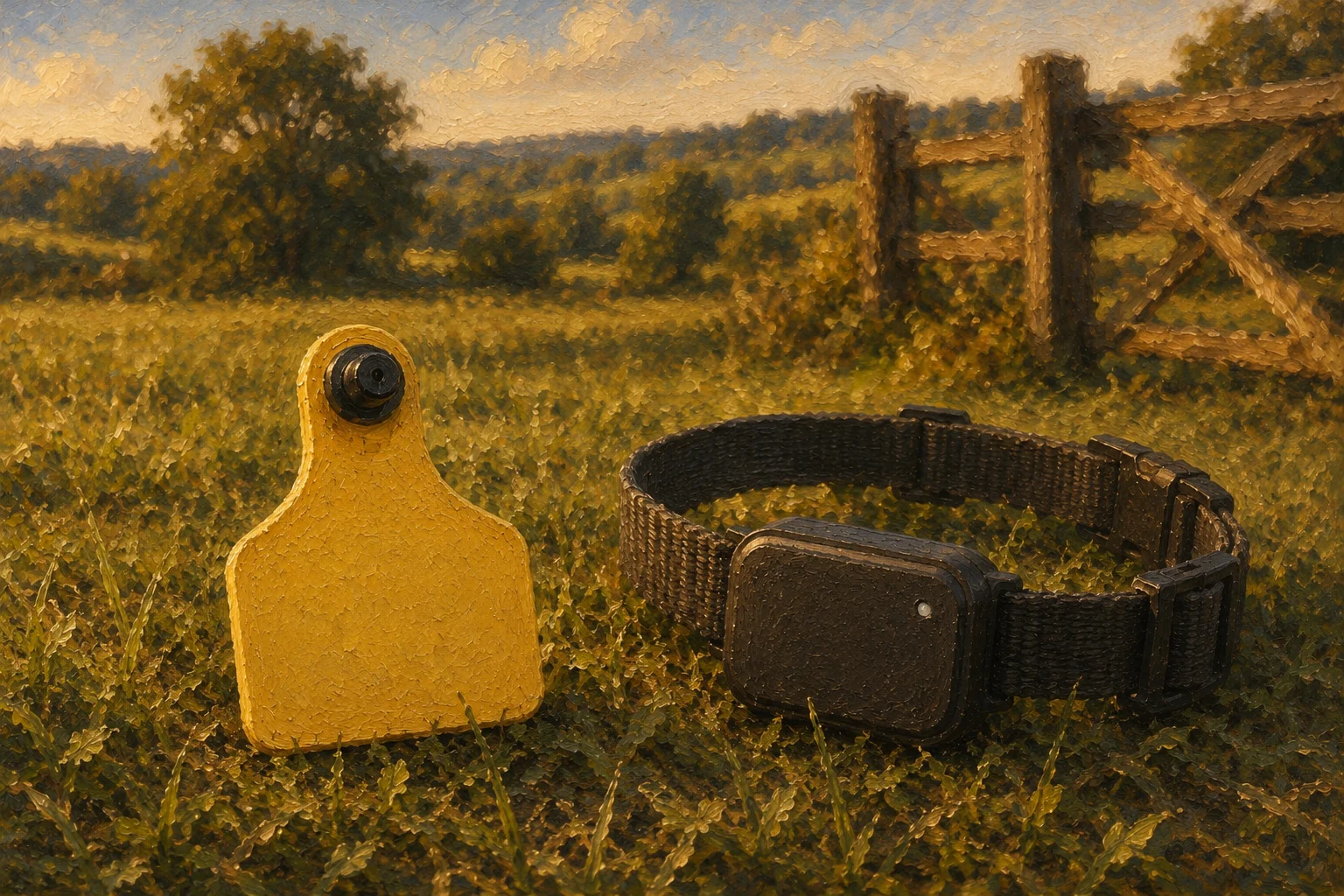
Monitoring collars are worn around the cow's neck and may contain accelerometers or other sensors that measure movement and behaviour.
Depending on the product, collars may monitor:
- General activity
- Heat-related movement
- Rumination
- Eating behaviour
- Resting patterns
- Possible health changes
Collars are commonly used in dairy systems, although some are also designed for beef and suckler herds.
Teagasc Future Beef farms have trialled automated collar systems for heat detection and health monitoring. One farm used collars to monitor activity and eating behaviour, with alerts sent directly to the farmer's phone.
See how a Teagasc Future Beef farmer uses activity collars for heat and health monitoring.
Ear tags
Sensor ear tags can combine the familiar format of an ear tag with technology for measuring activity, temperature or location.
They may be lighter and less intrusive than some collar systems, although the information collected and battery life vary between products.
Sensor ear tags should not be confused with standard electronic identification tags. An electronic identification tag primarily provides a unique animal number when scanned, while an active monitoring tag may collect and transmit behavioural or environmental information.
Leg-mounted sensors
Leg sensors or pedometers are often used to measure movement, standing and lying behaviour.
They can be useful for:
- Heat detection
- Monitoring lying time
- Identifying changes in movement
- Supporting lameness observation
Because the device is positioned on the leg, it may provide detailed information about steps and transitions between standing and lying.
Boluses
A bolus is placed inside the animal and normally remains in the reticulum.
Depending on the product, boluses may monitor internal temperature, drinking behaviour or other physiological indicators.
Because they are inside the animal, they are less likely to be lost on fences or damaged externally. However, they cannot usually be removed easily, and farmers need to check whether the device is suitable for the animal's age and size.
Cameras and computer vision
Camera-based systems monitor animals without requiring every animal to wear a device.
Software may analyse images or video to assess:
- Body condition
- Movement and gait
- Feeding behaviour
- Animal location
- Body dimensions
- Changes in group behaviour
These systems may be useful in sheds, collecting yards, handling facilities or parlours where animals pass through a predictable area.
Teagasc has tested technologies for automatically measuring cow body condition and locating animals using sensor-based systems.
View Teagasc research on automated body-condition scoring and animal location.
Electronic identification systems
Electronic identification, commonly called EID, uses a microchip or transponder to identify an individual animal.
When the tag is scanned, the reader retrieves the animal's unique number. This can make it easier to connect the animal with records such as:
- Treatments
- Weights
- Breeding information
- Movement records
- Calving history
- Performance information
EID is primarily an identification and record-keeping tool rather than a continuous behaviour-monitoring system. However, it can form an important part of a wider cattle-management setup.
Read DAERA's explanation of how electronic identification works.
Automatic weighing systems
Walk-over weighing systems record an animal's weight when it passes over a platform, reducing the need to gather the entire group for a separate weighing session.
Regular weight information may help farmers monitor:
- Daily liveweight gain
- Growth performance
- Response to feeding changes
- Animals falling behind the group
- Readiness for breeding or sale
Manual weighing can provide the same type of measurement, but automated systems may make it easier to collect information more frequently.
Teagasc recommends establishing a baseline weight and reweighing animals during the housing period to monitor growth and adjust management where necessary.
Read Teagasc guidance on weighing and monitoring cattle performance during winter.
What can cattle monitoring systems detect?
The information available depends on the sensors, software and intended purpose of the system.
Common monitoring areas include:
- Heat and breeding activity
- General movement and inactivity
- Rumination and feeding behaviour
- Standing and lying patterns
- Body or internal temperature
- Location
- Weight and growth
- Possible signs of illness
- Possible changes before calving
Farmers should check exactly what a product measures rather than relying only on broad claims such as health monitoring or artificial intelligence.
A system may measure activity accurately but infer health indirectly from that activity. Another may record internal temperature but provide limited information about location. Few systems monitor every relevant indicator.
Heat detection and breeding management
Heat detection is one of the most established uses of cattle-monitoring technology.
Cows commonly become more active and restless during heat. A monitoring system can identify this rise in activity and alert the farmer.
This can be particularly useful:
- Overnight
- When visible heat behaviour is weak
- In larger groups
- During busy periods
- When several people share responsibility for observation
Teagasc notes that electronic indicators can monitor behaviour and notify farmers when an animal is showing signs of heat. It also highlights that many cows come into heat between evening and early morning, when observation may be more difficult.
Read Teagasc's guidance on electronic heat detection and successful breeding observation.
A heat alert does not guarantee that the cow will conceive. Body condition, nutrition, uterine health, semen handling and insemination timing remain important.
Health and illness monitoring
Animals often change their behaviour when they are unwell.
They may move less, eat differently, ruminate less, spend more time lying down or separate from the group.
A monitoring system may identify that change before the animal appears obviously sick during a routine check.
The value is not that the technology diagnoses the condition. Its role is to highlight a cow or calf that may need closer examination.
Possible causes of an alert could include:
- Illness
- Lameness
- Injury
- Heat
- Calving
- Changes in feed intake
- Stress
- Movement to a new group or field
Research reviewed by Teagasc has examined how collars and other precision livestock technologies may alert farmers earlier during disease progression.
View Teagasc research discussing the role of precision technologies in earlier animal-health alerts.
Calving monitoring
Changes in activity and behaviour can occur as a cow approaches calving.
These may include:
- Restlessness
- Repeated lying down and standing up
- Reduced feeding or grazing
- Moving away from the group
- Changes from the cow's normal movement pattern
A monitoring system may help farmers decide which animals need closer attention, particularly overnight or when cattle are calving outdoors.
However, no system can identify every calving accurately or determine whether intervention is required. Expected calving dates, physical signs, visual observation and farmer judgement remain essential.
A calving alert should be treated as a reason to inspect the cow rather than confirmation that labour has begun.
Location monitoring
Location monitoring can help farmers find animals across large, fragmented or difficult-to-see grazing areas.
Depending on the system, location may be provided using GPS, nearby receivers or other wireless technologies.
Potential uses include:
- Locating an animal that has separated from the herd
- Finding cattle in rough or wooded ground
- Identifying unusual movement patterns
- Confirming whether animals remain within a grazing area
- Reducing time spent searching for a specific cow
Location accuracy, update frequency and battery consumption vary considerably between products. A system that updates location continuously may consume more power than one that reports at longer intervals.
How is the information transmitted?
Collecting information is only one part of the system. The data must also reach the farmer.
Depending on the product, this may happen through:
- A local base station
- Mobile networks
- Wi-Fi
- Bluetooth
- Low-power wide-area networks
- Satellite connectivity
- A reader positioned in a parlour, yard or handling area
The most suitable option depends on the farm's geography and infrastructure.
Factors such as hills, trees, sheds, distance between grazing blocks and poor mobile coverage may affect performance.
One Teagasc Future Beef farm required a mobile solar-powered base station because trees interfered with signal coverage across the grazing platform.
See how signal coverage was managed on a Teagasc Future Beef farm.
What should Irish farmers consider before choosing a system?
A useful system should solve a real farm problem and fit naturally into the way the herd is managed.
Before investing, farmers should consider the following areas.
The main problem it needs to solve
The first question should not be which system has the most features.
It should be:
What problem am I trying to solve?
This might be:
- Missing heats
- Spending too much time checking cows
- Finding sick animals too late
- Monitoring cows around calving
- Locating cattle across distant grazing blocks
- Tracking liveweight gain
- Reducing uncertainty when cattle are out of sight
A system designed primarily for heat detection may not provide the location information required on an extensive beef farm. A GPS system may help locate cattle but provide limited fertility information.
Accuracy and false alerts
No monitoring system will interpret every behavioural change correctly.
Farmers should ask suppliers:
- How accuracy was tested
- Whether testing included pasture-based herds
- How often false alerts occur
- How the system handles individual differences between animals
- Whether sensitivity can be adjusted
- How long the system needs to establish a baseline
A missed alert can reduce trust in the system. Too many unnecessary alerts can create additional work and lead to alert fatigue.
Teagasc research has evaluated commercially available collar systems within pasture-based production, reflecting the importance of testing technology under the conditions in which Irish cattle are managed.
Battery life
Battery life affects maintenance, reliability and the long-term cost of the system.
Farmers should confirm:
- The expected battery life under normal use
- Whether the battery is replaceable or rechargeable
- What happens when battery levels become low
- Whether location tracking reduces battery life
- Who is responsible for replacing failed devices
- Whether the warranty covers battery performance
A device intended for cattle grazing remotely needs to operate reliably without frequent handling.
Coverage and connectivity
A demonstration at a yard or agricultural show may not reflect performance across the entire farm.
Before committing, farmers should establish:
- Where base stations or readers will be installed
- Whether all fields are covered
- How sheds, hills and trees affect the signal
- Whether the system works without mobile coverage
- What happens if the internet connection fails
- Whether additional infrastructure carries an extra cost
A farm map and on-site coverage assessment may be more useful than a general estimate.
Device fit and durability
Equipment used on cattle must withstand rain, mud, handling facilities, rubbing, fences and normal herd behaviour.
Farmers should consider:
- The weight and size of the device
- Whether it is suitable for calves as well as mature cows
- The risk of loss or damage
- How easily it can be fitted or removed
- Whether animals need to be restrained for installation
- How frequently the fit needs to be checked
Any wearable device should be fitted correctly and checked for signs of rubbing, discomfort or damage.
The quality of the alerts
More data does not automatically mean better information.
A useful alert should make it clear:
- Which animal needs attention
- What changed
- When the change began
- How significant the change appears to be
- Where the animal is, where available
- What the farmer should check next
A long dashboard of graphs may be useful for analysis, but during a busy day the farmer may mainly need a clear list of animals to inspect.
Integration with existing farm records
Monitoring data is more useful when it can be considered alongside existing information.
This may include:
- Animal identification numbers
- Breeding records
- Expected calving dates
- Milk records
- Health treatments
- Weights
- Genetic information
- Group and field movements
Farmers should ask whether data can be exported and whether the system integrates with software they already use.
Teagasc research has highlighted the growing use of behaviour monitors, milk recording and genomic information, while also examining how information from different sources can be used together to support reproductive decisions.
Read Teagasc's research on combining wearable, fertility and herd data.
Data ownership and access
Farmers should understand what happens to the information collected from their cattle.
Questions to ask include:
- Who owns the data?
- Can the farmer download it?
- Is it shared with other organisations?
- How long is it retained?
- What happens if the subscription ends?
- Can historical records be transferred to another system?
- How is access protected?
These questions are particularly important when a monitoring system becomes part of daily herd-management decisions.
Support and training
Even a well-designed system may require setup, training and occasional troubleshooting.
Farmers should establish:
- Who installs the equipment
- What training is provided
- Whether support is available during evenings or weekends
- How quickly damaged devices are replaced
- Whether software updates are included
- Who helps interpret alerts during the first weeks
Good onboarding is important because farmers need time to understand how alerts relate to what they see in their own herd.
How much do cattle monitoring systems cost?
Costs vary widely depending on the type of device, the number of animals, the infrastructure required and the services included.
Possible costs include:
- The sensor, collar, tag or bolus
- Base stations, gateways or readers
- Installation
- Monthly or annual software subscriptions
- Mobile or satellite connectivity
- Replacement devices
- Battery replacement or charging
- Training and support
- Integration with other farm software
Farmers should ask for the total cost over several years rather than looking only at the initial device price.
A low-cost sensor may become expensive if it requires frequent replacement. A higher initial investment may be more economical if the equipment is reliable and the subscription includes support and replacements.
How can farmers assess the potential return?
The potential return depends on the problem the system is intended to solve.
Possible sources of value include:
- Fewer missed heats
- Earlier attention to health concerns
- Reduced time spent searching for animals
- More targeted night-time or calving checks
- Better use of farm labour
- Improved growth monitoring
- Reduced production losses
- Better breeding and culling decisions
Before purchasing, farmers can estimate:
- How often the current problem occurs
- What it costs in labour, production or treatment
- How much of that cost the system could realistically reduce
- The total annual cost of the technology
- How success will be measured after the first season
The system should be assessed against a clear outcome rather than the amount of data it collects.
Can monitoring systems replace routine herd checks?
No.
Technology cannot assess every aspect of an animal's condition. It may not identify a broken fence, contaminated water source, difficult calf presentation or every early sign of disease.
Farmers still need to observe:
- Body condition
- Gait and mobility
- Eyes, nose and breathing
- Manure consistency
- Injuries and swelling
- Feed and water access
- Housing and field conditions
- Group behaviour
The most useful role of monitoring technology is to add another layer of visibility between those checks.
It can help answer a practical question:
Which animals should I look at first?
How to introduce a monitoring system on the farm
Farmers do not need to change every part of herd management at once.
A practical introduction may involve:
- Selecting one clearly defined problem
- Starting with a suitable group of animals
- Confirming coverage across the relevant fields or sheds
- Allowing the system time to establish normal behaviour
- Comparing alerts with physical observations
- Recording whether each alert resulted in useful action
- Reviewing the results after a defined period
During the early stages, it may be useful to record:
- How many alerts were useful
- How many appeared unnecessary
- Whether important events were missed
- How much time the system saved
- Whether it changed a management decision
- Whether staff found it straightforward to use
This gives the farmer a practical basis for deciding whether to expand the system across the herd.
Questions to ask a cattle-monitoring supplier
Before committing to a system, farmers should consider asking:
- What does the device measure directly?
- What does the software infer from those measurements?
- Has the system been tested in Irish or pasture-based conditions?
- How accurate are the alerts?
- How many false alerts should I expect?
- Will every field and shed be covered?
- What happens when mobile or internet coverage is unavailable?
- How long will the battery last?
- What happens if a device is lost or damaged?
- Can I export my data?
- Who owns the data?
- Does it integrate with my existing herd records?
- What is included in the subscription?
- What is the total cost over three to five years?
- Can I trial the system before fitting the entire herd?
Clear answers to these questions are more useful than a long list of features.
Looking ahead
Cattle monitoring technology is becoming a more common part of data-driven herd management.
Teagasc reported in 2025 that approximately 20% of Irish dairy cows were being monitored using behaviour-monitoring technologies, reflecting the growing use of sensors alongside milk recording and genomic information.
See Teagasc's overview of behaviour-monitoring technology in Irish dairy herds.
The long-term value of these systems will depend on whether they can turn large amounts of data into information that is clear, timely and useful on the farm.
At Graze Technologies, we are developing cattle monitoring technology designed to help farmers identify meaningful changes in activity and behaviour, locate animals more easily and focus their attention where it may be needed most.
Frequently asked questions
What is the best cattle monitoring system?
The best system depends on the farm's main challenge. A dairy farm focused on heat detection may need a different system from an extensive beef farm that needs animal location, health alerts or long battery life. Farmers should begin by identifying the problem they want the technology to solve.
What do cattle monitoring collars measure?
Depending on the product, collars may measure activity, movement, rumination, eating behaviour, resting patterns and changes associated with heat or possible health concerns. Farmers should confirm which indicators are measured directly and which are inferred by the software.
Can cattle monitoring systems detect illness?
Monitoring systems cannot diagnose a specific illness. They may identify changes in activity, feeding, rumination or temperature that suggest an animal should be examined more closely.
Can cattle monitoring systems detect heat?
Activity-monitoring systems may identify increased movement and restlessness associated with heat. They can support visual observation and breeding management, but they do not guarantee conception or replace other fertility-management practices.