Early Signs of Calving in Beef Cattle
 James5 min read
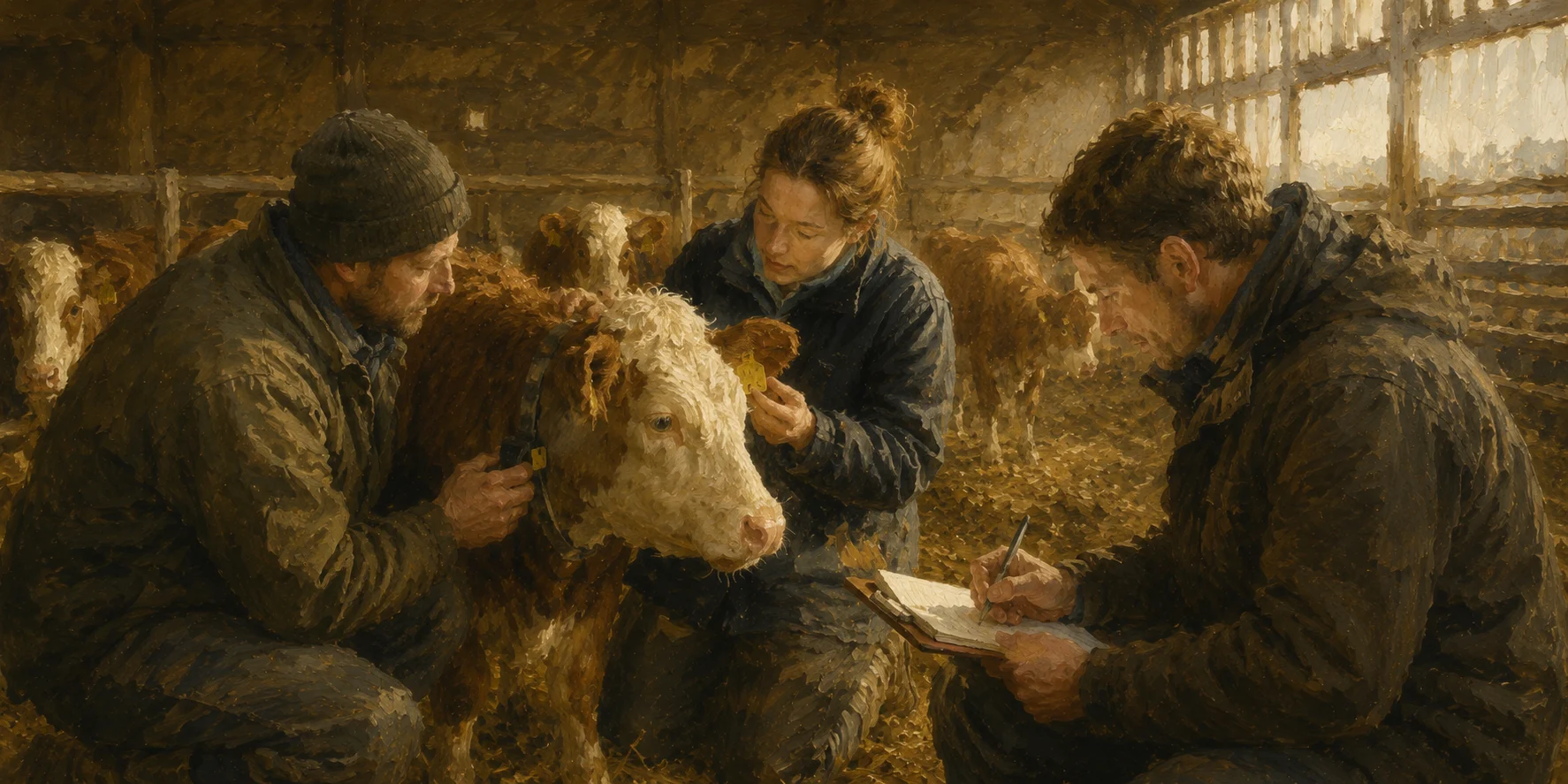
Calving is one of the most important times to watch cattle closely. Some cows show clear signs as they get closer to calving, while others change more subtly.
For beef farmers, the challenge is timing. A cow may look normal during one check, then begin showing signs of calving several hours later. This is especially difficult when cattle are spread across fields, grazing away from the yard or calving overnight.
Knowing the early signs of calving can help farmers decide which animals need closer attention and when it may be time to intervene or seek veterinary advice.
What are the early signs of calving?
The early signs of calving can vary between animals, but many cows show physical and behavioural changes before labour begins.
Common signs can include:
- Swelling of the udder
- Relaxation around the tail head
- Restlessness or repeated lying down and standing up
- Separating from the herd
- Reduced interest in grazing
- Looking around at the flank or tail area
- Discharge from the vulva
- Visible straining as labour progresses
Not every cow will show every sign. Some animals show obvious changes, while others may move quickly from early signs to active labour.
Behaviour can change before visible labour begins
Behaviour is often one of the first things to change before calving.
A cow may become more restless, spend more time standing alone, move away from the group or repeatedly lie down and get back up. Some animals may also become quieter or less interested in grazing.
These changes are not always dramatic. They can be easy to miss during routine checks, especially if the cow is grazing at a distance or calving in a field with limited visibility.
Why cows often separate before calving
Many cows naturally seek a quieter area before calving.
This may mean standing away from the herd, moving towards the edge of a field or choosing a sheltered place. In some cases, this behaviour is normal and expected.
However, isolation can also be linked to illness, injury or stress. The context matters. A cow standing away from the herd close to her expected calving date should usually be watched more closely.
Physical signs are important, but timing can be difficult
Physical signs such as udder development, relaxation around the pelvis and discharge can help indicate that calving is approaching.
However, these signs do not always tell farmers exactly when calving will happen. Some cows may show changes for days before calving, while others progress more quickly.
This is why calving checks can be so time-consuming. Farmers are often trying to balance close observation with the risk of disturbing the cow too often.
Why night checks are difficult
Calving does not follow working hours.
Many farmers know the routine of late-night checks, early-morning checks and broken sleep during calving season. These checks are important, but they can also be physically demanding, particularly over several weeks.
The difficulty is that a cow may show little change during an evening check, then begin active labour overnight. This creates a visibility gap between inspections.
When should farmers be concerned?
Farmers should always use their judgement and seek veterinary advice when they are unsure.
Possible warning signs can include:
- Strong straining with no progress
- A water bag visible for a prolonged period without delivery
- Signs of exhaustion or distress
- Abnormal presentation of the calf
- A cow that seems unwell before or during calving
- Labour taking longer than expected
Each case is different, and the right response depends on the stage of labour, the cow, the calf and the farmer's experience.
How monitoring technology can help
Technology cannot replace calving checks, experienced judgement or veterinary advice.
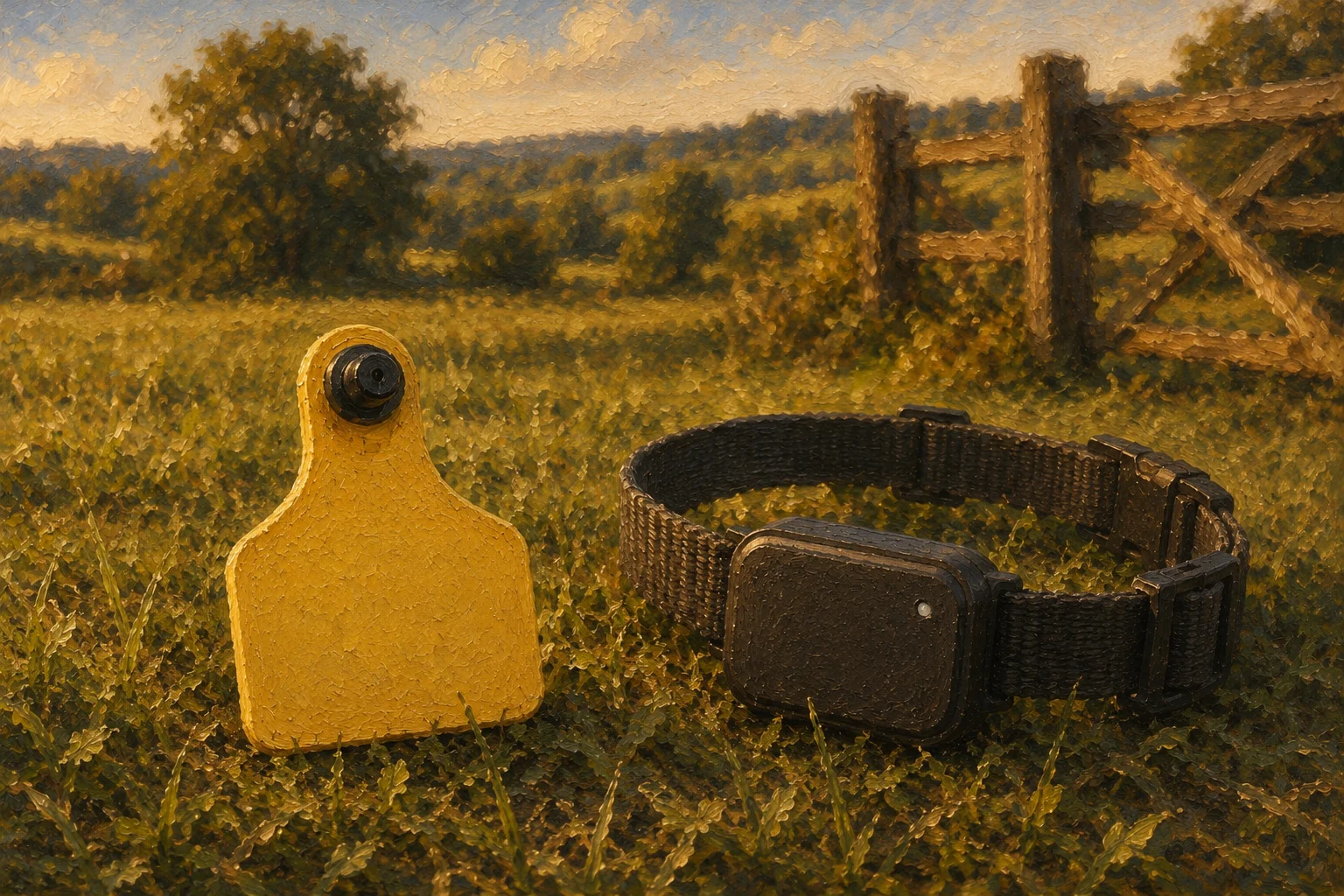
However, monitoring systems can help identify behavioural changes that may suggest a cow is approaching calving. Changes in activity, restlessness, lying patterns or isolation may indicate that an animal should be checked more closely.
The value is not in replacing the farmer. It is in giving farmers another layer of visibility between routine checks, especially overnight or when cattle are calving outdoors.
Looking ahead
Calving will always require careful observation and good livestock management.
The challenge is that early signs can be subtle, timing can be unpredictable and farmers cannot watch every cow every hour of the day.
At Graze Technologies, we are developing cattle monitoring technology designed to help farmers identify meaningful behavioural changes earlier, including changes that may suggest a cow needs closer attention during calving season.
Frequently asked questions
What are the first signs a cow is close to calving?
Early signs can include udder development, relaxation around the tail head, restlessness, separating from the herd, reduced grazing and repeated lying down and standing up.
Why does a cow stand away from the herd before calving?
Some cows naturally seek a quieter or more sheltered area before calving. However, isolation can also indicate illness or stress, so it should be considered alongside other signs and the cow's expected calving date.
How long after early signs does a cow calve?
Timing varies. Some cows show early signs for days, while others progress more quickly. Behavioural and physical changes can help indicate that calving is approaching, but they do not always predict the exact timing.
Can technology predict when a cow will calve?
Technology cannot predict every calving accurately or replace farmer judgement. However, monitoring systems may help identify changes in behaviour, activity or isolation that suggest a cow should be checked more closely.
When should a farmer call a vet during calving?
A farmer should seek veterinary advice if there is strong straining with no progress, signs of distress, abnormal calf presentation, prolonged labour or any concern that the cow or calf may be at risk.