Virtual Fencing for Cattle in Ireland: How It Works and When It Makes Sense
 James10 min read
Virtual fencing for cattle is attracting more interest in Ireland because it promises a simple idea: control where animals graze without relying only on physical fences.
For farmers managing fragmented land, rough grazing, outfarms or difficult field layouts, the concept is appealing. Instead of building or moving fences in every location, virtual fencing systems use collars, GPS and alerts to help keep cattle within a defined grazing area.
But virtual fencing is not the right fit for every farm. It works best when it solves a clear grazing, labour or land management problem. For some farms, location visibility or livestock monitoring may be more useful than virtual fencing itself.
Quick answer: Virtual fencing can make sense for Irish farms with fragmented land, rough grazing, outfarms or rotational grazing challenges. It is most useful where physical fencing is difficult, expensive or time-consuming. It may be less useful where paddocks are already well fenced, cattle are close to the yard and grazing management is simple.
| Technology | Main purpose | Best question it answers |
|---|---|---|
| Virtual fencing | Manage where animals graze | Can I control grazing areas more flexibly? |
| GPS tracking | Show where animals are | Where are my cattle now? |
| Livestock monitoring | Track behaviour, activity and routine changes | Which animals may need closer attention? |
What is virtual fencing for cattle?
Virtual fencing uses GPS-enabled collars or devices to create a digital boundary for grazing animals.
Instead of relying only on a physical fence, the farmer sets a grazing area through software. The animal wears a device that can detect where it is in relation to that boundary.
Depending on the system, the animal may receive an audio cue when it approaches the boundary. If it continues moving past the boundary, the system may use a further stimulus to encourage the animal to move back.
The aim is to guide grazing behaviour without needing a physical fence in every location.
How does virtual fencing work?
Most virtual fencing systems rely on three main parts: a device worn by the animal, a digital map and a way for the farmer to manage boundaries.
| Part of the system | What it does | Why it matters |
|---|---|---|
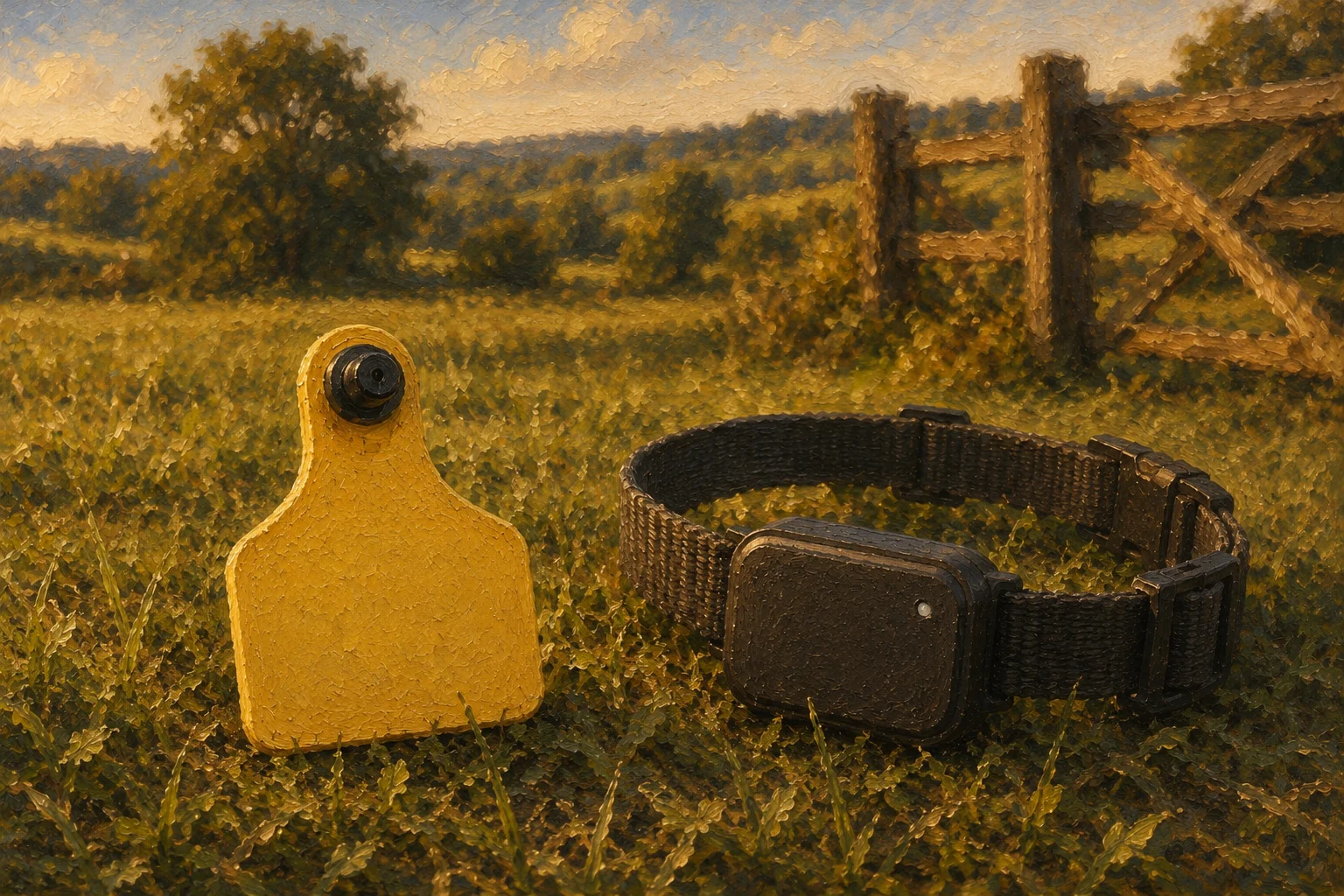
| Animal device | Tracks animal location and delivers boundary cues | Allows the system to know when an animal is approaching the virtual boundary |
| Digital boundary | Defines the grazing area on a map | Lets the farmer adjust grazing areas without moving physical fencing every time |
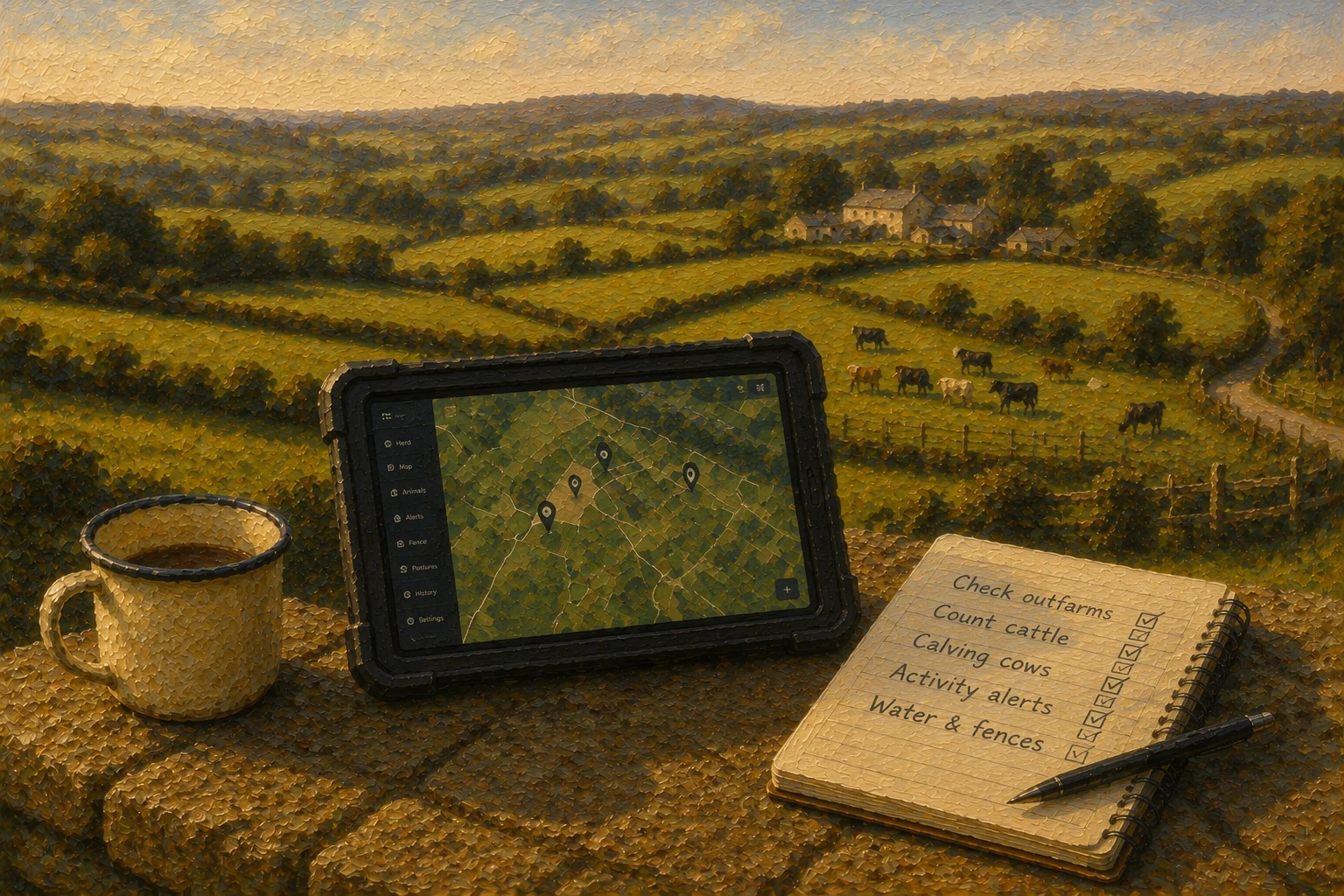
| Farmer app or dashboard | Allows boundaries, animal locations and alerts to be viewed | Gives the farmer visibility and control over the grazing setup |
| Connectivity | Sends data between the device and the system | Important for updates, alerts and remote visibility |
The details vary by system, but the basic idea is the same: use location data and animal cues to manage grazing boundaries more flexibly.
Why are Irish farmers interested in virtual fencing?
Irish farms often have land and labour challenges that make flexible grazing tools appealing.
Land may be split across multiple blocks. Some fields may be difficult to fence. Outfarms may take time to check. Rough grazing, hill ground and conservation areas may not suit standard paddock layouts.
Virtual fencing is most interesting where farmers want more control over grazing without constantly moving wire, posts or temporary fencing.
It may help farmers:
- Manage grazing across awkward or fragmented land
- Reduce the need to move temporary fencing as often
- Protect certain areas from overgrazing
- Control access to sensitive areas
- Support rotational grazing
- Improve visibility of where animals are
- Reduce time spent checking or moving animals manually
For farms where grazing control is already simple, the benefit may be smaller. For farms where fencing and grazing management take significant time, the value may be much higher.
Virtual fencing vs physical fencing
Virtual fencing does not make physical fencing irrelevant. In many cases, farms will still need boundary fences, handling facilities, road safety measures and secure areas for managing animals.
The question is not whether virtual fencing replaces every fence. The better question is where it can reduce the amount of fencing work needed inside a grazing system.
| Fencing type | Best for | Limitations |
|---|---|---|
| Permanent physical fencing | Secure boundaries, road safety and long-term field divisions | Less flexible and can be expensive or difficult to install in some areas |
| Temporary electric fencing | Short-term paddock divisions and rotational grazing | Takes time to move, maintain and check |
| Virtual fencing | Flexible grazing areas, awkward land, rough grazing and digital boundary changes | Requires devices, connectivity, training and farmer confidence in the system |
For many farms, the practical answer may be a mix: physical fencing for essential boundaries and virtual or digital tools for more flexible grazing decisions.
Where virtual fencing can add value
Virtual fencing is most useful where it solves a clear grazing or land management problem.
| Farm situation | Potential value | Why |
|---|---|---|
| Fragmented land | High | Can support more flexible grazing without building permanent divisions everywhere |
| Rough or hill grazing | High | Physical fencing may be difficult, expensive or unsuitable in some areas |
| Rotational grazing | Medium to high | Digital boundaries may reduce the work of changing grazing areas |
| Sensitive habitats or restricted areas | Medium to high | Can help manage access to areas that need protection or controlled grazing |
| Well-fenced paddocks beside the yard | Lower | Existing fencing and routine checks may already work well |
The more time a farmer spends managing grazing boundaries, moving fences or checking awkward land, the stronger the case for considering virtual fencing.
What virtual fencing does not solve
Virtual fencing is mainly a grazing and boundary management tool. It does not automatically solve every herd monitoring problem.
For example, virtual fencing may help control where animals graze, but it may not provide detailed insight into whether a cow is sick, in heat, close to calving or behaving differently from normal.
That depends on what the system measures. Some systems focus mainly on boundaries and location. Others may also include activity or behaviour features.
Farmers should be clear about the job they need done before choosing a system.
Virtual fencing vs livestock monitoring
Virtual fencing and livestock monitoring are related, but they are not the same thing.
| Technology | Main purpose | Best question it answers |
|---|---|---|
| Virtual fencing | Manage where animals graze | Can I control grazing areas more flexibly? |
| GPS tracking | Show where animals are | Where are my cattle now? |
| Livestock monitoring | Track behaviour, activity and routine changes | Which animals may need closer attention? |
A farm may need one of these tools or a combination. For example, a farmer with outfarms may value location visibility. A farmer focused on calving, heat detection or early illness signs may need behaviour monitoring. A farmer managing complex grazing areas may be more interested in virtual fencing.
What costs should farmers consider?
The cost of virtual fencing is not just the device. Farmers should consider the full annual cost and the practical setup required.
Costs and requirements may include:
- The upfront cost of collars or animal devices
- Monthly or annual subscription fees
- Connectivity or data costs
- Gateway or base station costs, if required
- Battery charging or replacement
- Training animals to understand the boundary cues
- Time spent setting up digital boundaries
- Support, repairs and replacement policies
- Backup plans if devices are lost, damaged or lose signal
The financial case is strongest when virtual fencing reduces a real cost, such as time spent moving fences, labour spent checking awkward grazing areas, or the need for additional internal fencing.
When virtual fencing is worth considering
Virtual fencing is worth considering when it makes grazing management simpler or more flexible.
It may be useful if:
- You manage cattle across rough, hill or fragmented land
- You want more flexible grazing boundaries
- You use rotational grazing and spend time moving temporary fencing
- You need to protect certain areas from grazing pressure
- You want to manage access to parts of a field or block
- Physical fencing is difficult, costly or impractical
- You want more visibility of where animals are during grazing
When virtual fencing may be harder to justify
Virtual fencing may be harder to justify where existing fencing already works well and grazing management is straightforward.
It may be less urgent if:
- Your paddocks are already well fenced
- Your cattle are close to the yard
- You rarely move grazing boundaries
- You do not have rough, hill or fragmented land
- You mainly need health, heat or calving alerts rather than boundary control
- The system would add more management work than it removes
In these cases, livestock monitoring or simpler location tracking may be more relevant than full virtual fencing.
Animal welfare and training considerations
Any virtual fencing system needs to be used carefully and responsibly.
Animals need to learn how the boundary cues work. Farmers also need to understand how the system behaves in real conditions, including poor weather, weak connectivity, battery issues or animals moving as a group.
Before using virtual fencing, farmers should understand:
- How animals are trained to respond to cues
- What happens if an animal crosses the boundary
- How the system protects animal welfare
- How often devices need checking
- What alerts are sent to the farmer
- What backup plans are needed for roads, boundaries or high-risk areas
Virtual fencing should support good herd management. It should not replace regular observation, secure external boundaries or responsible animal care.
Our verdict: does virtual fencing make sense for Irish farms?
Virtual fencing can make sense for Irish farms where grazing control is a real challenge.
The strongest use cases are rough grazing, hill land, fragmented blocks, rotational grazing, conservation areas and farms where moving or installing physical fencing is difficult.
It is less compelling where land is already well fenced, cattle are close to the yard and the main challenge is not grazing control.
For many farms, the first step is to decide what problem matters most. If the problem is grazing control, virtual fencing may be worth exploring. If the problem is knowing which animals need attention, livestock monitoring may be the better starting point.
Graze Technologies pilot programme
At Graze Technologies, we are developing livestock monitoring technology designed for Irish farming systems, with a focus on meaningful behaviour alerts, simple decision support and better visibility across the herd.
We are currently speaking with Irish farmers who are interested in testing livestock monitoring in real farm conditions. Our pilot programme is free for selected farms and is designed to help us understand how monitoring can best support Irish suckler, beef and mixed farming systems.
If you are managing cattle across fragmented land, calving outdoors, struggling with visibility across groups or interested in earlier behaviour alerts, you can apply for the Graze pilot programme here.
Frequently asked questions
What is virtual fencing for cattle?
Virtual fencing uses animal devices, GPS and digital boundaries to help manage where cattle graze without relying only on physical fencing inside the grazing area.
Does virtual fencing replace physical fences?
Not completely. Farms may still need secure physical boundaries, road protection, handling facilities and backup fencing. Virtual fencing is usually more relevant for flexible grazing control inside a wider system.
Is virtual fencing useful for Irish farms?
Virtual fencing can be useful for Irish farms with rough grazing, hill land, fragmented blocks, outfarms or rotational grazing challenges. It may be less useful where paddocks are already well fenced and close to the yard.
What is the difference between virtual fencing and livestock monitoring?
Virtual fencing is mainly used to manage where animals graze. Livestock monitoring focuses more on behaviour, activity and routine changes that may suggest an animal needs closer attention.
Does virtual fencing help with animal health?
Virtual fencing itself is mainly a grazing control tool. Some systems may include location or activity features, but health, heat and calving alerts usually depend on broader livestock monitoring capabilities.
Is the Graze Technologies pilot free?
Graze Technologies is currently developing a free pilot programme for selected Irish farms. The aim is to test livestock monitoring in real farm conditions and learn what farmers need most from the system.