What Are the Early Behavioural Signs of Lameness in Cattle?
 James14 min read
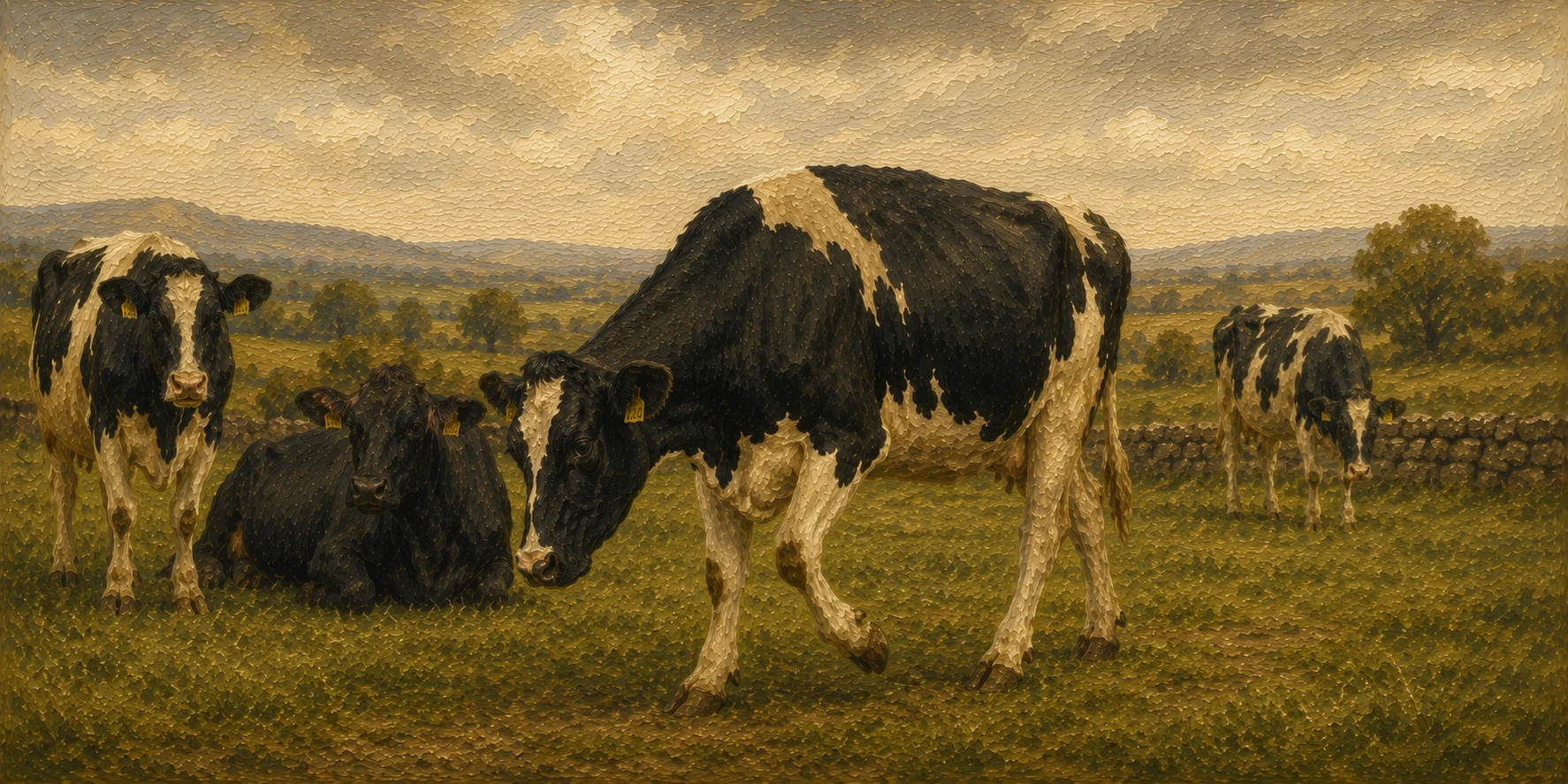
Lameness does not always begin with an obvious limp. In the early stages, a cow may simply walk more slowly, take shorter steps, spend longer lying down or begin falling behind the herd.
These changes can be easy to miss during a quick herd check, particularly when cattle are walking on grass, standing in deep bedding or moving as part of a large group.
Recognising subtle changes early can help farmers arrange closer examination and treatment before the problem becomes more painful, difficult to manage or costly.
This article explains the early behavioural signs of lameness, what farmers should look for and how regular mobility checks can help identify affected cattle sooner.
What is lameness in cattle?
Lameness is a change in the way an animal stands or moves because of pain, injury or discomfort.
The problem most commonly affects the feet and lower limbs, although injuries or conditions elsewhere in the body may also alter movement.
Possible causes include:
- Sole bruising
- White line disease
- Sole ulcers
- Digital dermatitis
- Foot rot
- Overgrown or uneven claws
- Stones or foreign objects in the hoof
- Joint or limb injuries
- Slippery, rough or damaged walking surfaces
Lameness is a welfare concern because it causes pain and can make it harder for cattle to reach feed, water, pasture or the parlour.
It can also affect milk production, fertility, body condition and longevity. Teagasc notes that lame cows may eat less, lose condition, produce less milk and experience poorer fertility performance.
Read Teagasc's overview of why dairy-cow lameness matters .
Why is early lameness difficult to spot?
A severely lame cow is usually easy to recognise. She may avoid putting weight on one limb, struggle to walk or show a very obvious limp.
Mild lameness can be much less visible.
A cow may compensate by changing her stride, posture or walking speed. She may still reach the feed barrier and move with the group, but do so less comfortably than before.
Early signs may also be hidden when:
- Cattle are walking through long grass
- The ground is uneven
- Animals are moving too quickly
- The farmer is viewing them from the front
- The cow is standing still
- Cattle are crowded together
- Deep bedding obscures foot placement
- Checks are carried out in poor light
The best opportunity to assess movement is often when cattle walk calmly, one at a time, on a level and non-slip surface.
What are the early behavioural signs of lameness?
Early lameness often appears as a collection of small changes rather than one dramatic sign.
Possible behavioural signs include:
- Walking more slowly than the herd
- Taking shorter or uneven steps
- Falling behind when cattle move
- Spending more time lying down
- Taking longer to rise
- Reluctance to walk to feed, water or the parlour
- Standing with weight shifted away from one foot
- Repeatedly lifting or resting a limb
- Turning more carefully than normal
- Reduced grazing or feeding time
- Using softer ground where available
- A change in the cow's normal activity level
None of these signs confirms a particular hoof condition. However, they can indicate that the animal should be watched walking and examined more closely.
1. Walking more slowly than the herd
A mildly lame cow may continue moving with the group but gradually fall behind.
Farmers may notice that she:
- Leaves the paddock later than the other cows
- Arrives last at the parlour
- Needs more encouragement to move
- Walks at the back of the group repeatedly
- Chooses a slower route or softer ground
Walking speed can be affected by temperament, age, pregnancy and general health, so one slow journey does not always indicate lameness.
A repeated change from the cow's usual position or pace is more meaningful.
2. Shorter or uneven steps
A change in stride is one of the clearest early movement signs.
The cow may:
- Take shorter steps with one limb
- Place one foot down more carefully
- Move with an uneven rhythm
- Avoid fully extending a leg
- Show a slight head movement while walking
- Place the back feet outside the position of the front feet
The difference may be easier to see from behind or from the side than from directly in front of the animal.
Watching several cows walk over the same surface can also make an abnormal stride easier to recognise.
3. A change in back posture
A cow experiencing foot pain may change the way she holds her back.
Farmers may notice:
- An arched back while walking
- An arched back while standing
- A stiffer appearance through the spine
- Less fluid movement through turns
An arched back can also occur because of abdominal pain or another health problem, so it should be considered alongside gait and other signs.
Where the posture changes mainly during walking, lameness becomes a stronger possibility.
4. Spending more time lying down
A lame cow may lie down for longer because standing and walking are uncomfortable.
Possible signs include:
- Remaining lying while the group rises
- Lying down soon after reaching a new paddock
- Spending less time at the feed barrier
- Being reluctant to rise when approached
- Changing lying position frequently
More lying time is not always caused by lameness. Cattle may also lie more because of weather, illness, fatigue or normal resting patterns.
The combination of increased lying, reduced walking and an altered gait is more concerning than lying behaviour alone.
5. Difficulty rising or lying down
Foot or limb pain can change the way an animal lowers or lifts herself.
A cow may:
- Pause before attempting to rise
- Rock forwards and backwards several times
- Rise more slowly than normal
- Avoid placing full weight on one limb
- Lower herself carefully or unevenly
- Remain standing because lying down appears uncomfortable
Difficulty rising can also result from injury, weakness, poor flooring, inadequate space or other illness.
An animal that cannot rise, is repeatedly falling or appears severely distressed requires prompt assessment and veterinary advice.
6. Reduced feeding or grazing
Lame cattle may spend less time feeding because reaching feed or standing at the barrier is painful.
Farmers may notice that the cow:
- Arrives late to feed
- Leaves the feed area early
- Grazes near the entrance instead of moving across the paddock
- Chooses feed that requires less walking
- Loses body condition
- Produces less milk
Reduced feeding has many possible causes, including illness, heat stress, poor feed quality and social competition.
Where lower intake occurs alongside a change in movement, the feet and legs should be examined.
7. Shifting weight or resting one foot
A cow may try to reduce pressure on a painful foot while standing.
Possible signs include:
- Holding one foot slightly off the ground
- Resting the toe rather than the full sole
- Repeatedly changing which foot carries weight
- Standing with the hind legs unusually close together or far apart
- Placing more weight on the front or back limbs
Cattle do sometimes rest a hind leg normally.
The behaviour becomes more concerning when the same limb is repeatedly protected or the cow also walks unevenly.
8. Reluctance to use hard or rough surfaces
A cow with sore feet may behave differently on concrete, stone or damaged roadways.
She may:
- Walk along the softer edge of a roadway
- Avoid stones or rough patches
- Slow down noticeably on concrete
- Hesitate at sharp turns
- Take longer to enter the parlour
- Step more confidently once she reaches grass or bedding
This difference between surfaces can be an important early clue.
Teagasc advises that well-designed and properly maintained farm roadways can support easier stock movement and reduce the risk of lameness.
Read Teagasc's guidance on building and maintaining farm roadways .
9. Changes in normal group behaviour
Lameness can affect where a cow positions herself within the herd.
She may:
- Walk at the back of the group
- Spend more time alone
- Avoid competing at feed or water
- Remain lying when the group moves
- Choose a nearby resting place instead of following the herd
These behaviours can also occur because of illness, calving or social factors.
The important question is whether the behaviour is unusual for that individual cow and whether a change in gait is also visible.
What is mobility scoring?
Mobility scoring is a structured method of watching cattle walk and assigning a score according to how comfortably they move.
It helps farmers identify cows with mild changes before lameness becomes severe.
A typical mobility-scoring system considers:
- Stride length
- Weight bearing
- Back posture
- Walking rhythm
- Ability to keep pace
- Obvious favouring of a limb
Animal Health Ireland describes mobility scoring as a simple way to assess and grade a cow's movement. It can help identify mildly lame cows that may benefit from examination and early treatment.
Read Animal Health Ireland's introduction to mobility scoring .
When is the best time to mobility-score cattle?
Cows should be observed walking naturally rather than being rushed.
A useful location is:
- Level
- Non-slip
- Well lit
- Free from deep mud or bedding
- Wide enough to see each animal clearly
- Positioned where cattle already walk routinely
Possible opportunities include when cattle leave the parlour, move through a handling area or walk along a suitable section of roadway.
Viewing cows from the side and behind can make differences in stride and weight bearing easier to see.
Regular scoring is more useful than a single annual assessment because it helps farmers identify changes and track whether treated animals improve.
Which cattle should be checked first?
Priority animals include cattle that:
- Show a clear change in stride
- Repeatedly fall behind the herd
- Hold up or protect one limb
- Have an arched back while walking
- Are reluctant to rise
- Spend much less time feeding
- Have a swollen foot or limb
- Have recently slipped or suffered an injury
- Were previously treated for lameness
- Show worsening mobility between checks
Severely lame animals or cattle unable to bear weight require urgent assessment.
Farmers should involve their veterinary practitioner or trained hoof-care professional where the cause is unclear, the animal is in significant pain or the problem does not improve promptly.
Why early treatment matters
Lameness is often easier to address when the affected cow is identified early.
Delaying examination can allow:
- Pain to become more severe
- A lesion to worsen
- The cow to lose body condition
- Milk production to decline
- Fertility performance to be affected
- Recovery to take longer
- The risk of premature culling to increase
Animal Health Ireland recommends routine observation and mobility scoring to identify subtle signs and support timely treatment.
Read Animal Health Ireland's guidance on treating lame cows early .
What should farmers examine?
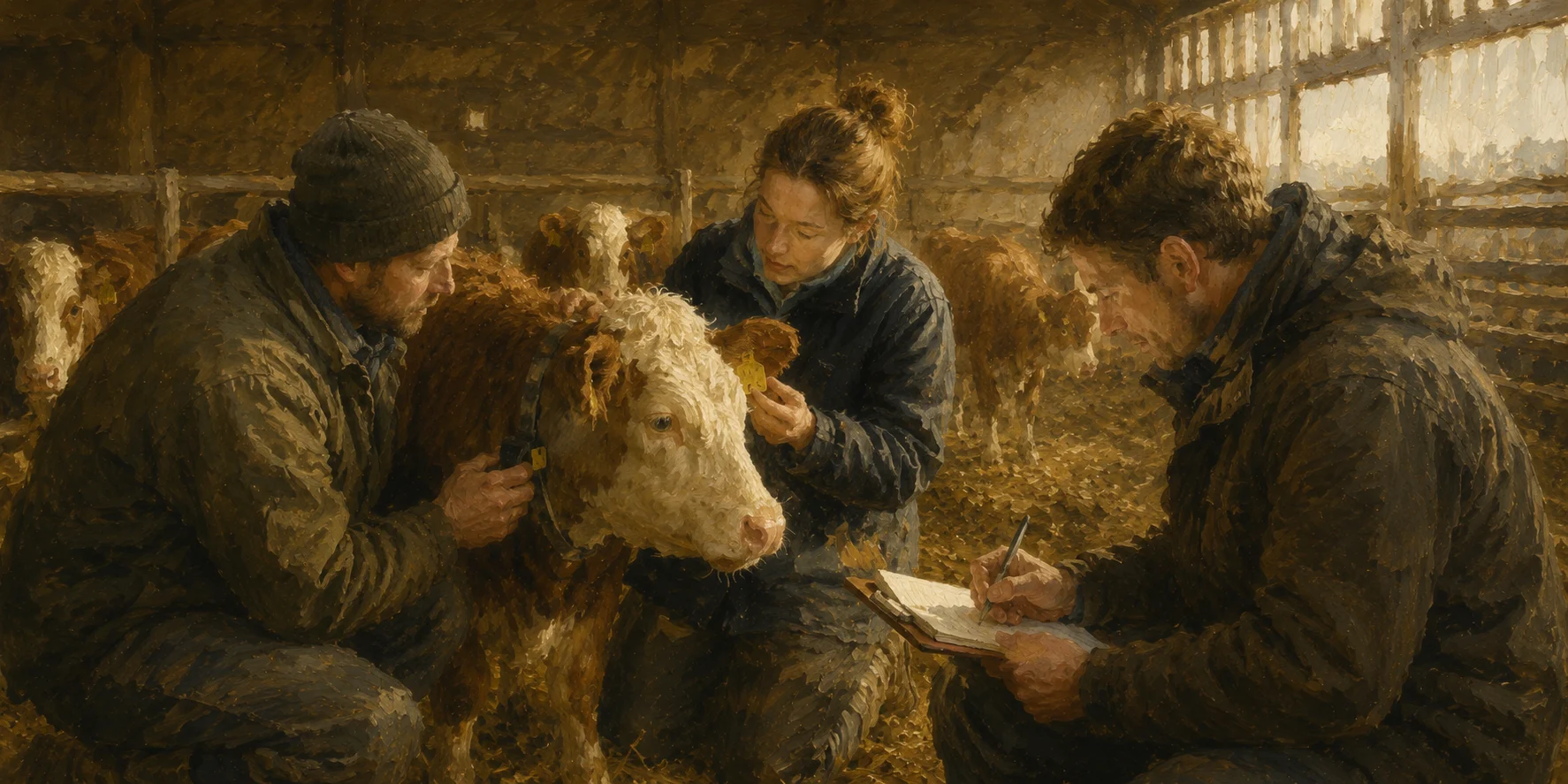
Once an animal has been identified, the farmer should assess the whole cow rather than assuming that every mobility change is caused by the hoof.
Depending on the situation, the examination may include:
- Watching the cow walk on a suitable surface
- Checking for swelling or heat
- Looking for cuts, stones or foreign objects
- Examining the space between the claws
- Checking whether one hoof is overgrown or misshapen
- Reviewing recent injury or treatment records
- Assessing appetite, temperature and general demeanour
Safe restraint is essential when examining feet.
Trimming or treatment should be carried out by someone with appropriate training and equipment. Incorrect trimming can worsen weight distribution or damage the hoof.
Common farm factors linked with lameness
Lameness is not always an isolated individual problem.
When several cows are affected, farmers should review possible herd-level risks such as:
- Rough or poorly maintained roadways
- Sharp stones
- Slippery floors
- Tight turns
- Overcrowding
- Long waiting times on concrete
- Insufficient lying space
- Poor cubicle comfort
- Wet or unhygienic conditions
- Inadequate hoof-care routines
- Rushing cattle during movement
Teagasc research on Irish pasture-based dairy farms has found lameness during both grazing and housing periods, showing that outdoor systems are not automatically free from risk.
Read Teagasc's practical strategies for reducing lameness .
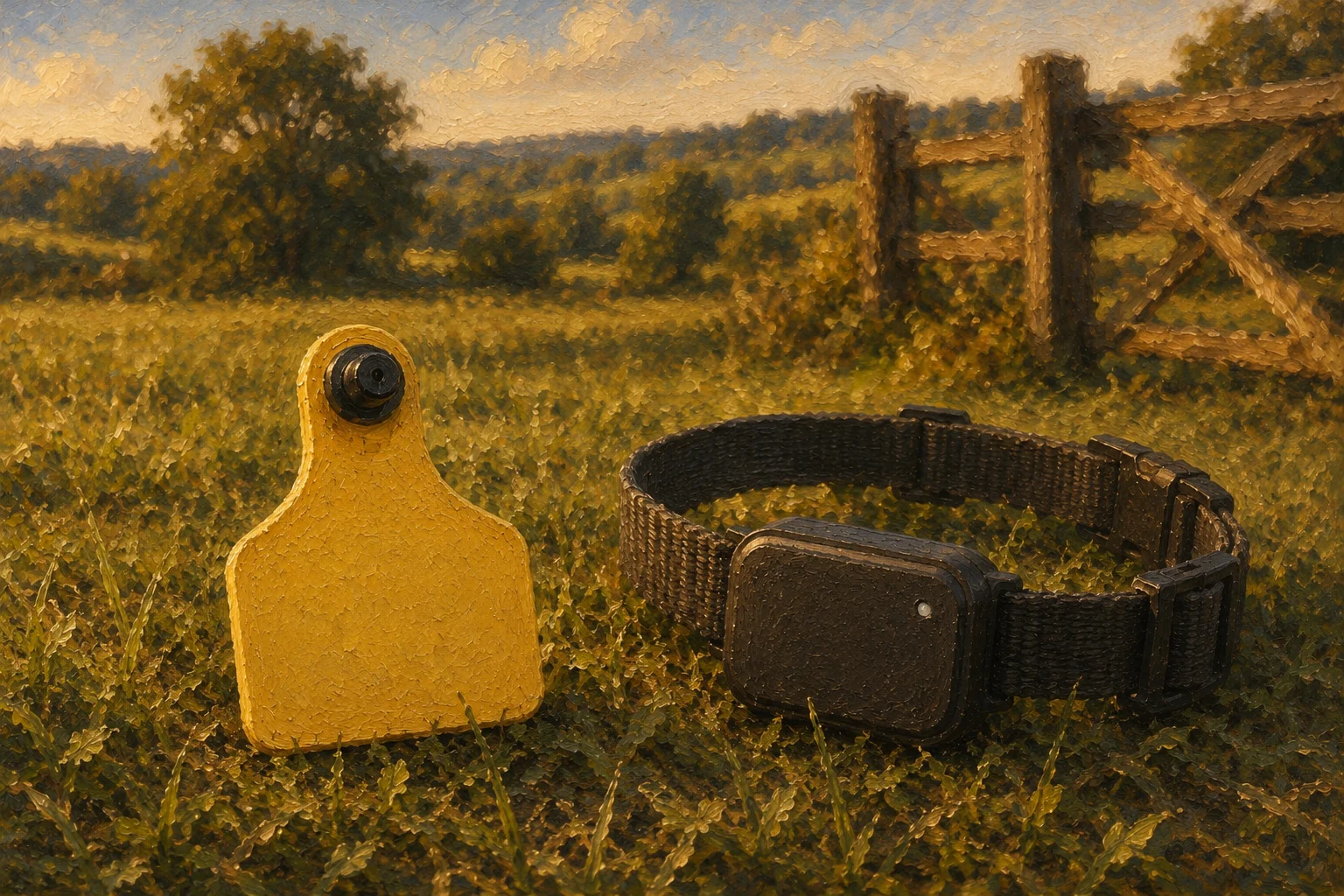
How monitoring technology may help
Early lameness can alter how much an animal moves, rests and travels around the farm.
Depending on the system, monitoring technology may help identify changes in:
- Daily activity
- Step count
- Walking distance
- Standing and lying time
- Transitions between standing and lying
- Movement to feed or water
- The cow's position within the herd
A monitoring system cannot identify the exact hoof lesion or diagnose lameness by itself.
Reduced activity may also occur because of illness, calving, weather or a management change.
The value is in highlighting an animal whose behaviour has changed so the farmer can watch her walking and decide whether a closer examination is needed.
Monitoring may be particularly useful where cattle are spread across fields or where mild changes occur between routine mobility checks.
Individual changes matter more than one fixed threshold
Not every cow moves the same amount.
Older animals, heavily pregnant cows and dominant cattle may have different normal routines from younger or more active herd mates.
A monitoring system is therefore more useful when it compares the animal with her own established pattern.
For example, a naturally quiet cow may not be concerning simply because she records fewer steps than the herd average.
A sudden and sustained reduction from her usual activity is more meaningful.
A practical early-lameness checklist
During routine checks, farmers can ask:
- Is any cow falling behind the group?
- Is one animal taking shorter steps?
- Does a cow have an arched back while walking?
- Is she protecting or lifting one foot?
- Has she become reluctant to use concrete or rough ground?
- Is she spending longer lying down?
- Is she arriving late to feed or the parlour?
- Has her normal activity changed?
- Is there swelling, heat or visible injury?
An animal showing several of these signs should be watched walking on a suitable surface and assessed promptly.
Looking ahead
Lameness is easier to recognise once a cow is obviously limping, but by that stage the condition may already be painful and affecting her daily behaviour.
The earlier clues are often smaller: a shortened stride, slower walking, more time lying down or reluctance to follow the herd.
Regular mobility scoring, careful observation and prompt examination can help farmers identify these changes before they become severe.
At Graze Technologies, we are developing livestock monitoring technology intended to help farmers identify meaningful changes in movement and activity between routine checks.
The aim is not to diagnose lameness or replace mobility scoring, hoof examination or veterinary advice. It is to provide another layer of visibility and help farmers identify animals that may need to be watched more closely.
Frequently asked questions
What are the first signs of lameness in cattle?
Early signs may include shorter steps, slower walking, falling behind the herd, an arched back, shifting weight away from one foot, increased lying time and reluctance to walk on hard surfaces.
Can a cow be lame without an obvious limp?
Yes. Mild lameness may appear as a subtle change in stride, posture, walking speed or activity before a clear limp develops.
Why is my cow walking slowly?
Slow walking may be caused by lameness, injury, illness, pregnancy, fatigue or temperament. A cow that repeatedly falls behind or walks unevenly should be examined more closely.
Why is a lame cow lying down more?
Standing and walking may be painful, so a lame cow may spend longer resting. Increased lying can have other causes, so it should be considered alongside changes in gait, feeding and general behaviour.
What is mobility scoring?
Mobility scoring is a structured way of observing and grading how comfortably a cow walks. It helps identify mild and severe lameness and can create a list of animals that need closer examination.
When should a lame cow be treated?
A cow showing a meaningful mobility change should be examined promptly. Severe lameness, inability to bear weight, swelling, injury or worsening signs require urgent attention and veterinary or trained hoof-care advice.
Can cattle-monitoring technology detect lameness?
Monitoring systems may identify changes in activity, walking distance, standing or lying patterns that are consistent with lameness. They cannot diagnose the cause, so the animal still needs to be observed walking and physically examined.