What Manual Herd Checks Actually Cost Irish Farms
 James4 min read
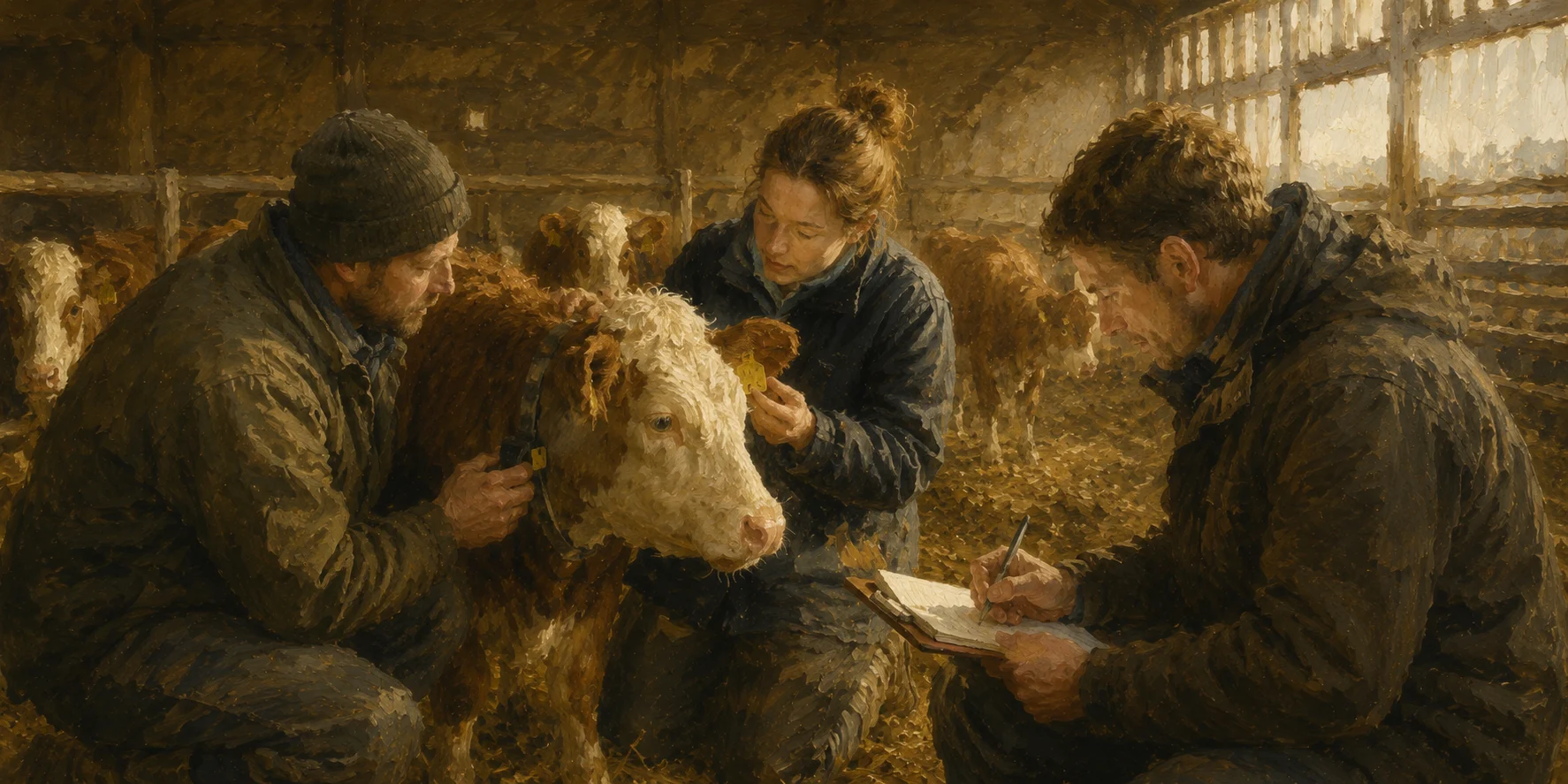
Routine herd checks are an essential part of livestock farming. They help farmers monitor animal health, identify cows that are in heat, spot signs of calving and ensure every animal is safe and accounted for.
However, they are also one of the most time-intensive jobs on the farm.
As herd sizes continue to grow and labour becomes more difficult to find, the time spent walking fields each day can add up to hundreds of hours every year. Even with regular checks, farmers only see what is happening at that specific moment. The hours between inspections remain largely unknown.
How much time do herd checks take?
The exact amount of time varies depending on herd size, land layout and the season. However, consider a typical Irish suckler herd of 80 cows spread across several fields.
A thorough herd check can easily take around 45 minutes when weather conditions are good and there are no issues that require further investigation.
During calving season, many farmers check their cattle twice a day. Outside of calving, one daily check is common.
That works out as:
Calving season (12 weeks):
Two 45 minute checks per day equals approximately 126 hours.
- Rest of the year (40 weeks): One 45 minute check per day equals approximately 210 hours.
Total: approximately 336 hours every year spent on routine herd checks.
That is the equivalent of more than eight standard working weeks dedicated solely to checking cattle.
Every farm is different, but the calculation highlights how quickly routine herd monitoring becomes one of the largest recurring labour commitments on a livestock farm.
Manual checks only show part of the picture
Time is only one part of the cost.
A manual herd check tells you what is happening while you are standing in the field. It cannot tell you what happened overnight or how an animal’s behaviour changed between inspections.
A cow may begin showing the early signs of illness during the night. A heifer could start calving several hours before the next scheduled check. An animal may become isolated or significantly reduce its activity long before obvious clinical symptoms appear.
These early behavioural changes are often subtle. They can be easy to miss during routine visual inspections, especially on larger farms.
Why early detection matters
Research consistently shows that identifying problems earlier leads to better outcomes for both farmers and their animals.
For example, Teagasc has estimated that lameness can cost hundreds of euro per affected dairy cow once treatment, reduced performance and additional labour are considered. Animal Health Ireland has also highlighted the significant economic impact of diseases such as Bovine Viral Diarrhoea (BVD), along with the long-term cost of poor fertility and extended calving intervals.
While the financial impact varies between farms and production systems, one principle remains consistent.
The earlier a problem is identified, the more opportunities there are to intervene before it becomes more serious and more expensive.
Labour pressures are increasing
Finding skilled farm labour has become increasingly difficult across Ireland.
At the same time, herd sizes have continued to grow. Farmers are expected to manage animal health, grassland, maintenance, compliance, paperwork and day-to-day operations, often with the same number of people.
Teagasc has identified labour availability as one of the key challenges facing Irish agriculture. As farms become larger, simply adding more manual herd checks is rarely a practical solution.
The challenge is no longer just working harder. It is finding better ways to monitor more animals without adding more hours to the working day.
Technology can fill the gaps between checks
Technology is not designed to replace the farmer.
Instead, it can provide visibility during the hours when no one is in the field.
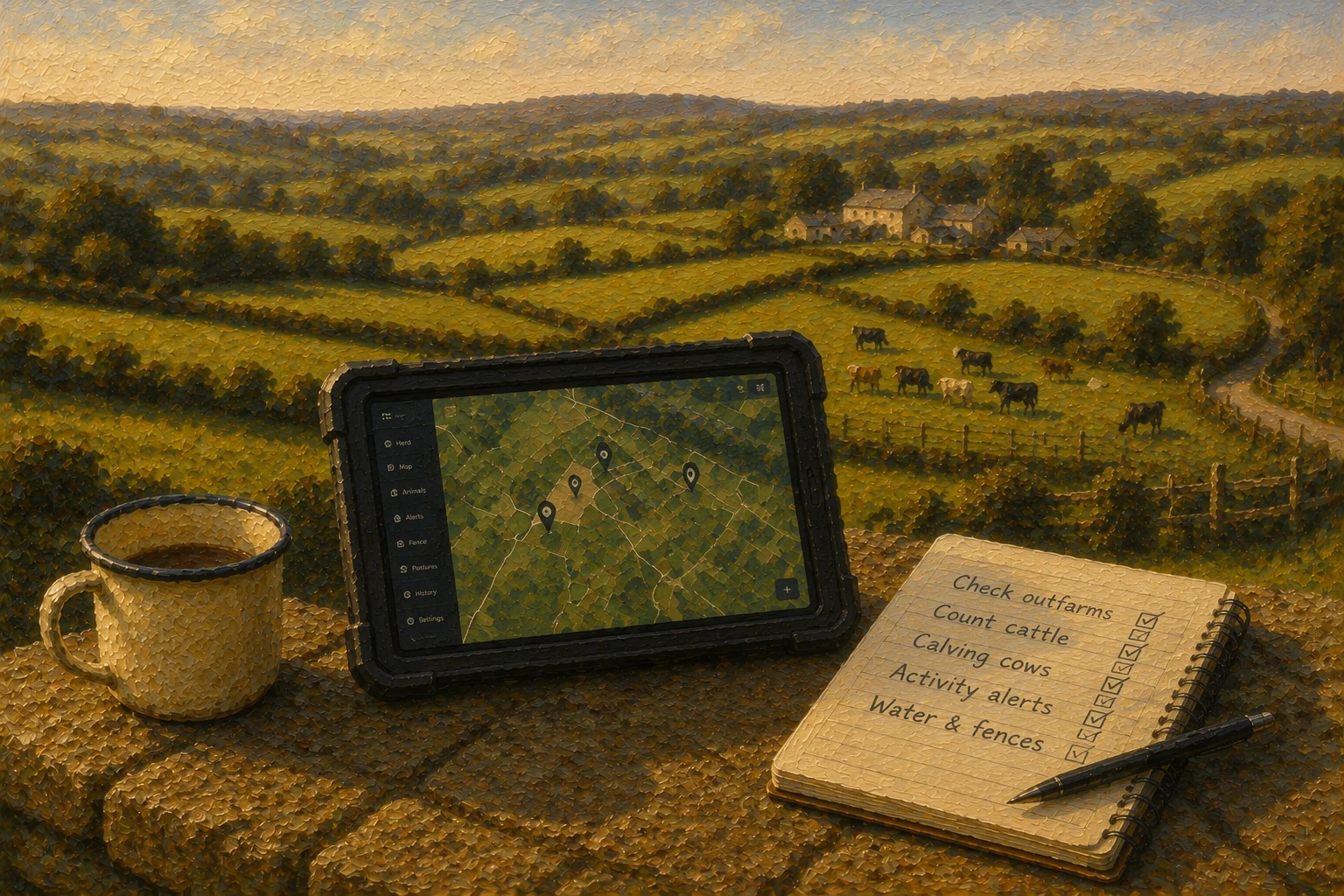
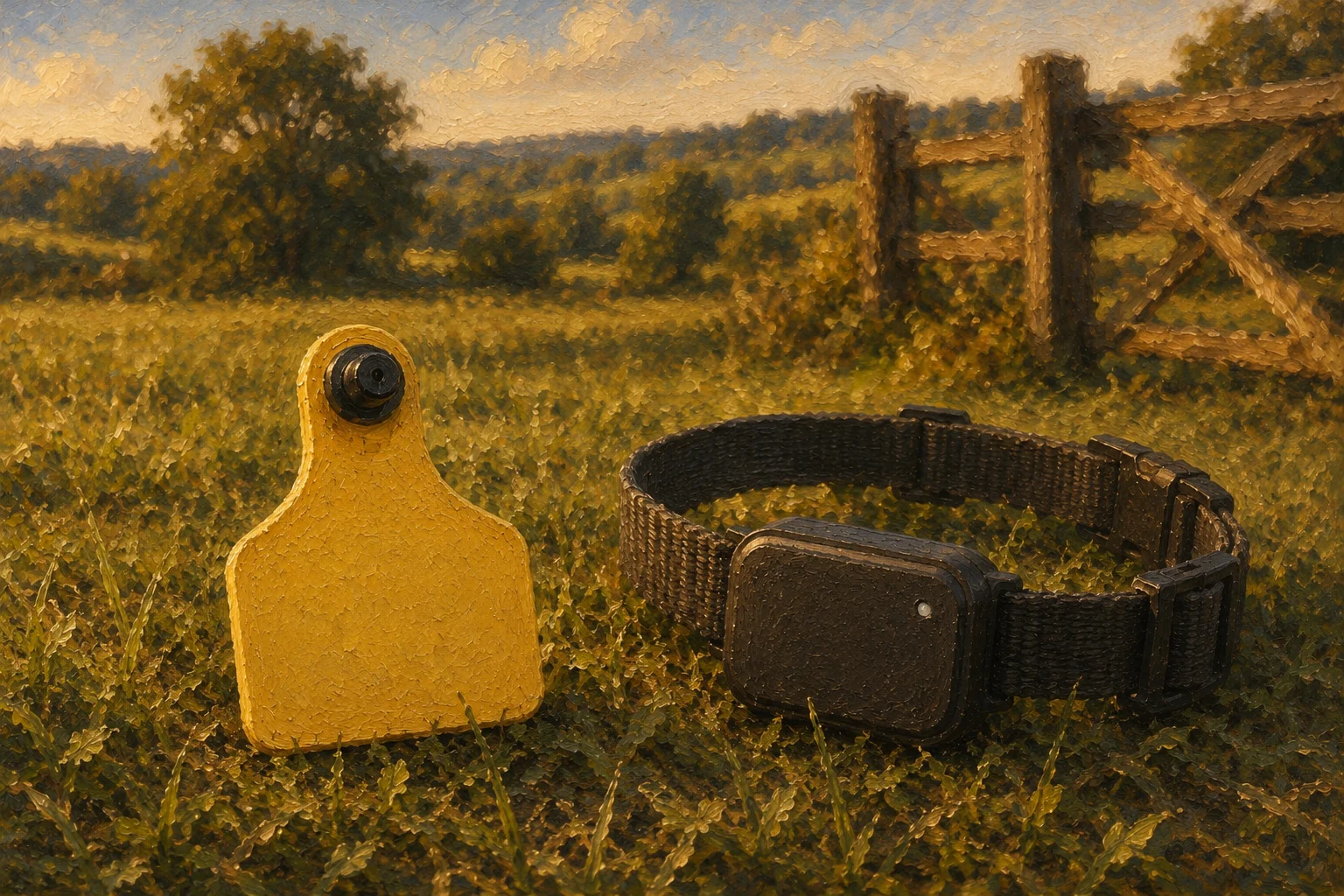
Continuous livestock monitoring systems can identify changes in activity and behaviour that may indicate illness, heat, calving or other events that require attention. Rather than checking every animal in exactly the same way every day, farmers can prioritise the animals that are most likely to need intervention.
The result is more targeted decision making, earlier intervention and better use of valuable time.
Looking ahead
Manual herd checks will always remain an important part of good livestock management.
However, as labour pressures continue to grow and farms become more complex, relying solely on periodic visual inspections becomes increasingly challenging.
Continuous livestock monitoring gives farmers another layer of information. It helps identify behavioural changes earlier, supports faster decision making and allows farmers to focus their time where it can have the greatest impact.
At Graze Technologies, we are developing smart cattle monitoring technology to help farmers detect changes in behaviour earlier, reduce unnecessary labour and make more informed decisions, while keeping farmers firmly at the centre of every decision.