Why More Farmers Are Selling Direct to Customers
 James15 min read
From farm shops and meat boxes to milk vending machines and weekend markets, more farmers are finding ways to sell food directly to the people who eat it.
For customers, buying directly can mean fresher food, clearer provenance and the chance to understand where a product came from.
For farmers, it can create a closer connection with customers and provide an opportunity to retain more of the value generated by what they produce.
Direct selling is not suitable for every farm. It requires time, planning, customer service, food-safety compliance and a reliable route to market. However, for farmers with the right product and location, it can become a valuable additional enterprise.
What does selling directly to customers mean?
Direct selling means that a farmer or food producer sells their product to the final customer rather than relying entirely on processors, wholesalers or large retailers.
This can take many forms, including:
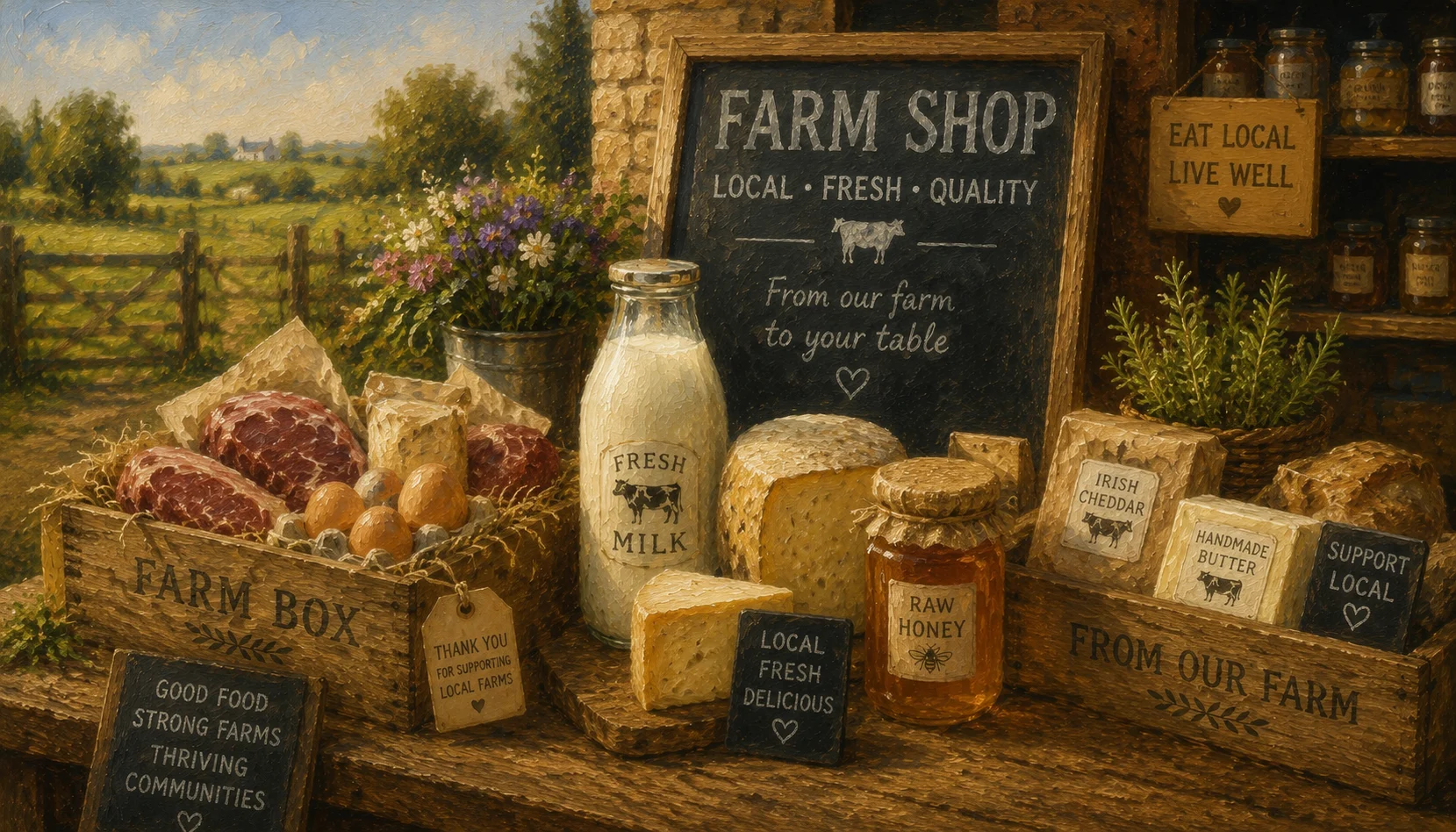
- Farm shops
- Farmers' markets
- Meat boxes
- Milk vending machines
- Roadside stalls
- Online farm shops
- Home delivery
- Click-and-collect services
- Subscriptions or regular food boxes
- Sales to local restaurants, cafés and independent shops
Some farmers sell only a small proportion of their produce directly. Others develop a separate food business around processing, packaging and retailing products from the farm.
Teagasc includes farm shops, farmers' markets, online platforms, vending machines, meat boxes and home-delivery services among the direct-sales options available to farms considering diversification.
Explore Teagasc's overview of direct-sales and farm-diversification options .
Why are more farmers exploring direct sales?
Most farmers are familiar with producing food. Direct selling adds a new challenge: turning that food into a product that customers can find, understand and choose to buy.
That extra work can be significant, but there are several reasons farmers are increasingly interested in taking it on.
1. Farmers can retain more of the final selling price
When food moves through several stages between the farm and the customer, the final retail price must cover processing, transport, packaging, distribution and retail costs.
By selling directly, a farmer may be able to retain a larger share of the final selling price.
That does not mean the difference becomes pure profit.
The farmer may now be responsible for costs such as:
- Processing
- Butchery or production
- Packaging
- Labelling
- Storage and refrigeration
- Transport and delivery
- Card-payment fees
- Market-stall fees
- Website costs
- Advertising
- Customer service
Direct selling can improve margins, but only where the price covers both the original farm production costs and the additional work involved in getting the finished product to the customer.
Teagasc notes that farmers' markets can allow producers to bypass traditional distribution channels, potentially improving margins while providing customers with fresh, locally produced food.
Read Teagasc's guide to farmers' markets as a diversification option .
2. Customers want to know where their food comes from
Direct sales give customers the opportunity to buy from a named farm or producer rather than an anonymous supply chain.
They may be interested in:
- Where the animals were reared
- How the farm is managed
- What breed is involved
- How far the product travelled
- Whether it was produced organically or regeneratively
- How animals are cared for
- Who produced the food
This interest in provenance can help smaller producers differentiate their products from food sold mainly on price.
Bord Bia has found that Irish consumers commonly associate local food with quality, natural ingredients and support for the local economy.
Read Bord Bia's research on Irish attitudes towards buying local food .
3. Farmers can explain the value behind the product
In a conventional supply chain, farmers may have little control over how the final product is presented.
Direct selling allows them to tell customers what makes their product different.
For example, a farmer may be able to explain:
- Why a particular cattle breed was chosen
- How the animals are grazed
- Why the product is seasonal
- How long beef is aged
- What goes into producing farmhouse cheese
- Why a smaller producer cannot compete solely on price
- How buying locally supports employment and services in the area
This story is not a substitute for a good product. However, it helps customers understand why one product may cost more than a supermarket alternative.
4. Direct contact provides immediate customer feedback
Farmers' markets and farm shops provide something that is difficult to obtain through a long supply chain: regular conversations with the person buying the food.
Customers may tell the producer:
- Which products they buy most often
- Which pack sizes they prefer
- Whether instructions are clear
- Which cuts of meat they find difficult to cook
- Whether they would use a subscription service
- Which new products they would like to see
- Why they did or did not buy something again
This allows farmers to test ideas on a smaller scale before investing heavily.
A customer may prefer smaller meat boxes, individual portions or simpler cooking instructions. A milk-vending customer may want reusable bottles, flavoured milk or easier card payments.
Bord Bia has highlighted farmers' markets as an important place for food producers to meet customers directly and test or validate new products.
Read Bord Bia's guidance on food markets as a route to customers .
5. Online selling has made local food easier to find
A farm no longer needs to rely entirely on passing traffic or a busy town-centre shop.
Websites, social media and online payments allow customers to discover a farm, place an order and arrange collection or delivery.
This has opened up several different models:
- Weekly pre-orders for collection
- Nationwide delivery of suitable products
- Monthly meat-box subscriptions
- Seasonal Christmas orders
- Social-media launches and limited product drops
- Online booking for farm-shop collection
- Local delivery routes on set days
Teagasc documented how Drumanilra Organic Farm developed an online shop selling products including Dexter beef, lamb, chicken, pork, eggs and vegetables. The business combined its own produce with products sourced from other organic producers.
View Teagasc's case study of an online organic farm shop .
Online selling can extend a farm's reach, but it also creates expectations around stock availability, delivery, refunds, food information and communication.
6. New technology makes unattended selling possible
Not every direct-sales business requires a fully staffed shop.
Milk vending machines, egg boxes, honesty stalls and refrigerated collection lockers can allow customers to buy from the farm with less day-to-day staffing.
Milk vending has become a particularly visible example. Depending on the setup, customers can bring a bottle or purchase one at the machine and buy milk directly from the farm.
Teagasc describes milk vending as a possible diversification option for Irish dairy farmers, offering a way to sell pasteurised or unpasteurised milk directly to customers.
Read Teagasc's overview of milk vending machines .
One Teagasc case study describes a self-service milk-vending business operating around the clock, alongside sales to restaurants, coffee shops and an ice-cream producer.
See how one Irish farm developed a milk-vending enterprise .
7. Direct sales can create a role for another family member
A direct-sales enterprise may create work that is different from traditional farm work.
It may suit someone interested in:
- Food production
- Retail
- Marketing
- Design and branding
- Social media
- Customer service
- Cooking or product development
- Delivery and logistics
- Managing an online shop
This can allow another family member to build a business around the farm without necessarily taking over the same day-to-day farming role.
It may also provide an additional income stream that is not tied entirely to the price offered for the farm's main commodity.
What are farmers selling directly?
Direct selling is not limited to vegetables and eggs.
Irish farms and small food businesses now sell a broad range of products directly, including:
- Beef and lamb boxes
- Fresh milk
- Cheese, butter and yoghurt
- Ice cream
- Free-range eggs
- Poultry and pork
- Potatoes and vegetables
- Fruit and preserves
- Honey
- Flour and oats
- Christmas turkeys
- Flowers
- Cider and juice
- Wool and sheepskin products
Some businesses focus narrowly on one product. Others develop a wider shop by combining their own food with products from neighbouring farmers and local producers.
Why meat boxes have become popular
Meat boxes allow a farmer to sell a selection of cuts together rather than relying on customers to choose only the most familiar products.
A typical beef or lamb box may contain a mixture of:
- Steaks or chops
- Roasting joints
- Mince
- Diced meat
- Burgers or sausages
- Slow-cooking cuts
This can help balance demand across more of the animal.
Customers may also appreciate the convenience of stocking the freezer with a varied selection in one order.
However, the farmer still needs to plan slaughter, butchery, packaging, cold storage, collection and delivery carefully. Customers also need clear information about box size, contents and expected delivery dates.
Farmers' markets can be a useful place to start
Opening a permanent shop requires significant commitment. A farmers' market can provide a more flexible route for testing demand.
It allows a producer to learn:
- Which products attract attention
- What price customers will accept
- How much stock to bring
- Which packaging works well
- Whether customers return
- Which questions people ask
- Whether the market attracts the right audience
Markets can also help farmers build a customer list before launching online sales, home delivery or a permanent farm shop.
Bord Bia maintains information about farmers' markets around Ireland, where customers can find food from growers, farmers, butchers, bakers and cheesemakers.
Explore Bord Bia's guide to farmers' markets in Ireland .
Direct selling is not the easy option
Producing food and selling food are two different jobs.
A farmer who begins selling directly may also become responsible for:
- Setting prices
- Managing stock
- Taking photographs
- Writing product descriptions
- Replying to customer messages
- Running social-media accounts
- Handling complaints
- Preparing orders
- Managing deliveries
- Keeping food-safety records
- Maintaining consistent opening hours
Customers may send messages in the evening, miss collection times or expect products that are currently out of stock.
Direct sales can create a better margin, but they can also create a considerable amount of work that was previously handled elsewhere in the supply chain.
Farmers need to understand the full cost
A direct-sales price must cover more than the cost of producing the original farm commodity.
The calculation may need to include:
- The farm cost of production
- Processing and butchery
- Packaging and labels
- Transport
- Refrigeration and electricity
- Waste and unsold stock
- Market fees
- Website and card fees
- Insurance
- Advertising
- The value of the farmer's own time
It is easy to confuse a higher selling price with a higher profit.
A business may sell a premium product while still making a poor return if delivery routes are inefficient, too much stock is wasted or labour is not properly costed.
Food businesses must be registered correctly
Direct selling is still food retailing and must meet the relevant legal and food-safety requirements.
The appropriate requirements depend on:
- The type of food being sold
- Whether it is processed
- Where processing takes place
- Whether foods of animal origin are handled
- How products are stored and transported
- Whether food is sold online
- Whether products are sold only locally or more widely
The Food Safety Authority of Ireland states that a food business must be registered before it begins operating, including businesses operating from home.
Read the FSAI guidance on registering a food business .
Businesses handling or processing certain foods of animal origin may also require approval rather than registration alone.
Farmers should speak to the relevant competent authority early, before investing in facilities, packaging or equipment.
Selling online also carries responsibilities
An Instagram page or simple website can make a food business look informal, but the same legal responsibilities still apply.
Customers must receive the required food information, and the business must manage matters such as traceability, allergens, storage and delivery safely.
The FSAI advises that businesses selling food online must register with the relevant authority before they begin, even where the business operates only online.
View the FSAI guide to selling or advertising food online .
What makes a direct-sales farm business work?
There is no single model that works for every farm.
However, successful direct-sales businesses often have several things in common:
- A product customers genuinely want
- A clear reason for choosing it over alternatives
- Reliable quality
- Accurate pricing
- A convenient way to order or buy
- Consistent communication
- Good presentation and packaging
- A manageable delivery or collection system
- A realistic understanding of the workload
The business also needs a route to customers.
A high-quality product will not sell itself if the farm is difficult to find, the website is unclear or customers do not know when orders are available.
Starting small can reduce the risk
Farmers do not necessarily need to begin with a permanent shop or a large range of products.
A smaller test might involve:
- Attending one regular farmers' market
- Offering a limited number of pre-ordered meat boxes
- Running a seasonal Christmas service
- Supplying one local restaurant or café
- Opening for collection on one day each week
- Testing a simple online order form
- Partnering with another local producer
This can reveal whether customers return, whether the price works and how much time the enterprise actually requires.
Teagasc recommends examining the existing farm business, available skills, market demand, finances and family goals before progressing with a diversification idea.
Read Teagasc's advice on assessing a farm-diversification idea .
Direct selling can strengthen the connection between farms and customers
One of the less obvious benefits of direct selling is that it brings farmers and customers into the same conversation.
Customers can ask questions about farming, seasonality, animal care and food production. Farmers can hear what customers understand, what they value and where misconceptions exist.
Teagasc has identified a knowledge gap between consumers and modern farming practices, even though consumers generally hold positive views about animal welfare on Irish farms.
Read Teagasc's research on consumer attitudes towards farming and animal welfare .
A farm shop or market stall can therefore do more than sell food. It can give customers a clearer understanding of the work behind the product.
Is direct selling right for every farm?
No.
It may be a good fit where the farm has:
- A product that can be differentiated
- Access to a suitable customer base
- Someone interested in retail and marketing
- Time to develop the enterprise
- Suitable processing and storage arrangements
- A realistic financial plan
- A convenient collection, market or delivery route
It may be less suitable where:
- There is no clear local or online demand
- The farm team is already under severe labour pressure
- The product cannot be supplied consistently
- Processing and logistics costs are too high
- No one wants to manage customers and marketing
- The investment depends on unrealistic sales assumptions
Direct selling should be treated as a separate business decision, not simply an alternative outlet for surplus produce.
Looking ahead
Farm shops, markets, vending machines and online ordering have made it easier for customers to buy food directly from Irish producers.
For farmers, these routes can provide greater control over how products are priced, presented and sold. They can also create stronger relationships with customers and new opportunities for farm families.
However, direct selling transfers more responsibility to the farm. The farmer must not only produce the food but also build a brand, reach customers, manage orders and meet the legal requirements of a food business.
The strongest direct-sales businesses are not necessarily the ones with the largest product range or the most elaborate shop. They are the ones that understand their customers, price their products properly and choose a model that fits the farm.
At Graze Technologies, we are interested in how Irish farms are changing, diversifying and finding practical new ways to build more resilient businesses.
Frequently asked questions
Why do farmers sell directly to customers?
Farmers may sell directly to retain more control over pricing, build relationships with customers, explain the value of their products and create an additional source of farm income. Direct selling can also provide useful customer feedback.
What can farmers sell directly?
Products may include meat boxes, milk, cheese, eggs, vegetables, honey, poultry, pork, lamb, beef, preserves, flowers, cider and seasonal products. The legal and food-safety requirements vary according to the product and how it is processed.
Are farmers' markets profitable?
A farmers' market can provide a direct route to customers and may allow a producer to retain a greater share of the selling price. Profitability depends on pricing, market fees, travel, labour, unsold stock and whether the market attracts enough repeat customers.
Do farmers need to register before selling food?
Yes. The FSAI states that food businesses must register before beginning operations, including businesses operating from home or selling only online. Some activities involving food of animal origin may require approval.
What is a farm meat box?
A meat box is a pre-arranged selection of cuts sold together, often directly by the farm. It may include steaks, joints, mince, diced meat, burgers or slow-cooking cuts and is commonly collected from the farm or delivered to the customer.
Can farmers sell food online?
Yes, provided the business is registered appropriately and meets food-safety, traceability, labelling and consumer-information requirements. Farmers also need a reliable system for payment, packaging, cold storage and delivery where applicable.
What is the easiest way to test direct sales?
A farmer may begin with a limited number of pre-orders, one regular market, seasonal sales or a collection day rather than investing immediately in a permanent shop. This allows demand, pricing and workload to be tested on a smaller scale.